
lummi island wine tasting june 13 ’15
Friday Breads (sign up for preorder list! )
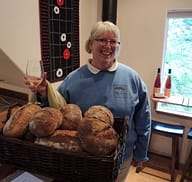
Honey Rye– Rye sourdough culture, 1/3 fresh milled rye flour, coarse ground rye and a bit of honey for sweetness. Try with cheese or smoked salmon – $5/loaf
Sonnenblumenbrot (Sunflower Seed Bread). Bread flour + cracked rye and toasted sunflower seeds. – $5/loaf.
Traditional Bagels! Shaped, boiled, topped with seeds, and baked– plain, sesame seed, poppy seed, or mixed sesame and poppy. Limited, so order early! – 4 for $5.
Punts
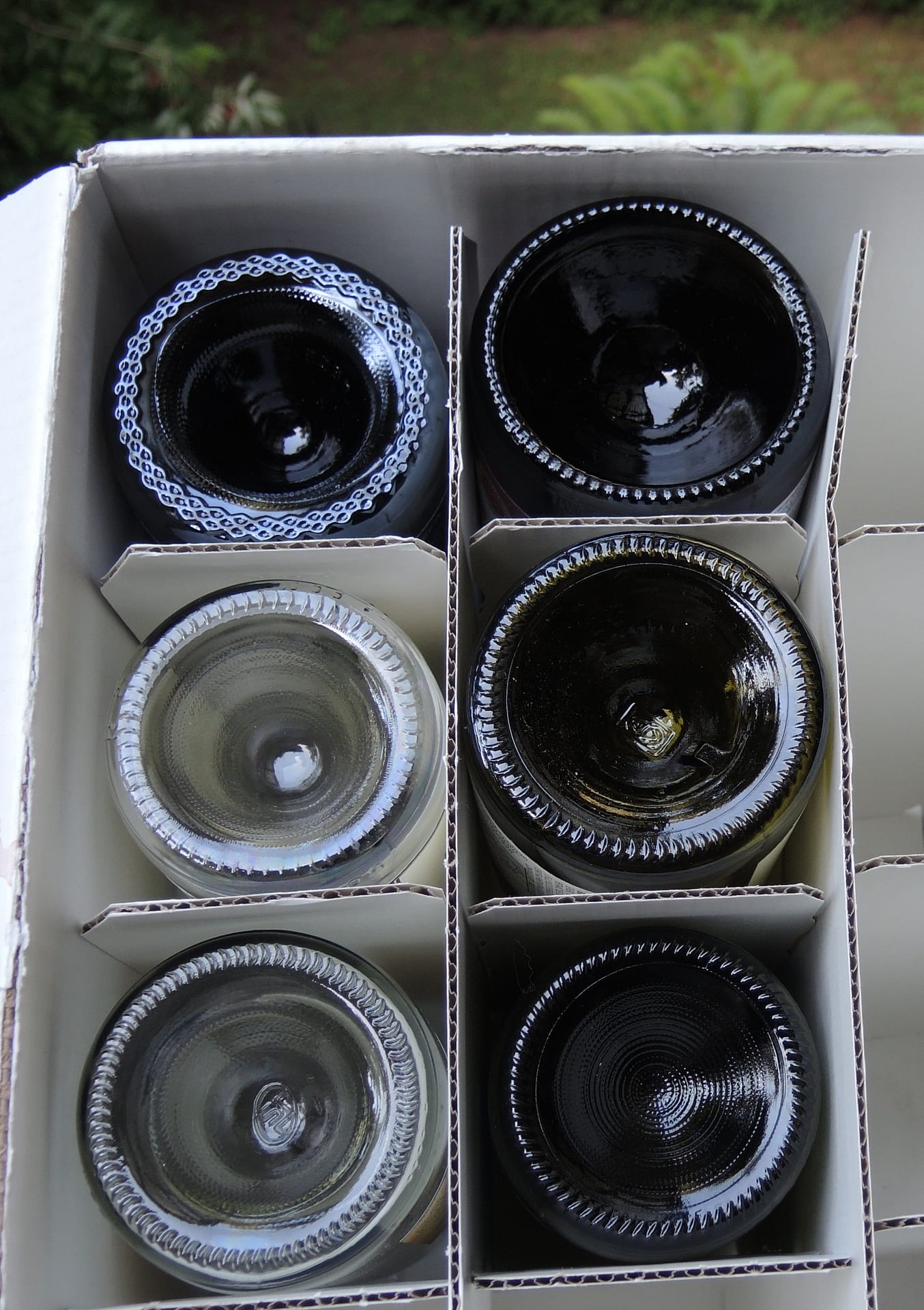 Recently the subject of “punts” came up in conversation– you know, the indentation of various sizes on the bottom of some wine bottles. So I agreed to do a little research into the subject. As one might expect, most of the theories are speculative. Some suggest that in the Old Days, there was something in the manufacturing process that made them necessary; but if so, why continue now?
Another suggestion is that for sparkling wines, deep punts have structural value because they add strength against the gas pressure that builds up in the bottles. That makes a certain amount of sense; my one outing sabering a bottle of bubbly (breaking the top off with a sword) only works because the gas pressure in the bottle “helps” the top to pop off after the whack of the sabre has induced a crack in the neck of the bottle. But still, why do other wines have them? (see video)
On the marketing side, we note that most wine bottles are standardized to contain 750 ml, yet they are all different sizes, shapes, thicknesses, and weights. We have noticed some tendency to put expensive wines in heavier, thicker, and sometimes taller bottles with very deep punts, apparently to make a visual and sensory impression of Size and Value. To some degree, if you make the bottle bigger, some volume has to be removed in order to keep the 750ml contents constant, and really the only place to take away volume is in the punt. So that makes a little sense.
It also turns out that while some white wine bottles have punts, very many do not, but almost all red wine bottles have them. That suggests at least one historical and ongoing reality about wine, and that is that even today many red wines can precipitate sediment as they age. It is generally agreed that the ring around the inside of the punt is quite effective at collecting the sediment in the bottom of the bottle (that’s why we always stand up our decades-old cellar selections a day or two before we open them…ah, mais oui!). Though we have found no Official Rationale for the punt, the sediment collection function is the one that rings most true to us– that’s our Story and we’re Sticking With It!
TPP Update
 Bambi meets Godzilla is a little video that was big in the mid-seventies, you know, when we were all coming down off the Sixties High, and were getting, like, you know, a little Cynical about our Corporate and Institutional Values. Fast forward: a couple of months ago we alerted our dear readers to the Incoming Threat of the Trans Pacific Partnership, a secret trade deal that Global Corporations have been writing for the past five years. Its terms have been kept strictly secret from the public and even from Congress (unfortunately, I AM NOT MAKING THIS UP!)
Regrettably, so-called Liberal (I don’t think so!) President Obama and many other government leaders are already Lobbying for “fast-tracking” it through Congress– that is, putting it up for a an Up or Down vote with no discussion and no amendments, after making it difficult or impossible for Representatives or Senators to even see it or read its many volumes.
As Bernie Sanders puts it: “Let’s be clear: the TPP is much more than a “free trade” agreement. It is part of a global race to the bottom to boost the profits of large corporations and Wall Street by outsourcing jobs; undercutting worker rights;dismantling labor, environmental, health, food safety and financial laws; and allowing corporations to challenge our laws in international tribunals rather than our own court system. If TPP was such a good deal for America, the administration should have the courage to show the American people exactly what is in this deal, instead of keeping the content of the TPP a secret.” (read more)
(see Bernie on video, get Outraged, and Call Congress Now!)
Abeja

Late this afternoon our old friend and wine rep Laurent stopped by, a little confused that today was Thursday (and he is Way Younger than some of us!), and not Friday, when he often drops by to pour samples of a few wines and schmooze about things like the French-barge-wine tour he is leading in a few weeks, and the one he just set up for next Fall (2016 in the Camargue, that we would particularly like to go on!). A few weeks ago he brought in samples of several wines, two of which we liked a lot and are pouring this weekend.
The white is the Whidbey Island Siegerrebe, made nearby from a fast-growing, German white grape that can reach full maturity here on the cool, wet side of the Cascades. In recent years we have also carried the Mt. Baker Vineyards (our oldest “neighborhood” winery) version of this wine. Like many German whites, it is bright and crisp, with tingly citrus notes leaning toward grapefruit, but in a softer, less focused way than sauvignon blanc, which, t precise and finely cut, is the perfect “raw oyster” wine. In contrast, siegerrebe is more broadly adaptable, pairing well with fresh fruit, light salads, and simple pasta dishes.
Our high-end Red this weekend is from Abeja, a long-time top producer of Washington wines. Not only do they have a quiet reputation for Quality Winemaking; they also are an original member of “The Winegrowers’ Sustainable Trust,” which supports farming practices that “encourage responsible stewardship of soil health, fertility, and stability; support and build plant, animal, and soil diversity; utilize preventive plant protection; and minimize toxic inputs to decrease negative impacts on the land and the community for the health of future generations.” All you need to know is that their wines are consistently Above Average, evoking Unconscious musings of “mmmm, ahhhhh, and yum”
This week’s tasting
Whidbey Island Siegerrebe ’13 Washington $16
Explodes with aromas of spicy pear and exotic blossoms, followed by flavors of lichee nut, grapefruit, honey and pear. Finishes off-dry, delightful with spicy dishes and shellfish!
Del Rio Rose ’14 Oregon $10
Vibrant nose displays intense aromas of lychee, pineapple, and grapefruit that continue on the sauvignon blanc-like palate of richness and crisp acidity.
Antonio Sanguineti Chianti ’13 Italy $12
From Small Vineyards co-founder Antonio Sanguineti; friendly, approachable style that is rich and powerful, yet a great everyday wine that enhances many dishes.
Septima Malbec ’13 Argentina $8
Musky, ripe aromas of currants, leather, chocolate and espresso. Supple and generous flavors of sweet currant and tobacco flavors with a note of pepper, soft tannins and good length.
Abeja Merlot ’12 Washington $36
Expressive nose leads to pleasing density in the mouth, with rich notes of blueberry and blackberry that meld effortlessly with the espresso and wood spice aromatics.
lummi island wine tasting june 5-6 ’15
Bread Friday (sign up for preorder list! )
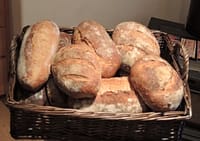
Toasted Pecan Flax Seed – Made with a rye sourdough culture and about 1/3 fresh milled whole wheat, toasted pecans and honey – $5/loaf.
Buckwheat Rye – 15% fresh milled rye and 30% buckwheat flour make for a dark and hearty loaf. – $5/loaf.
Chocolate Babka Rolls – Sweet roll dough with a chocolate/cinnamon butter filling. – 2 for $5.
Vine Training

The Guyot method was developed about 200 years ago by Dr Jules Guyot, and has special application for managing canopy density in lower-vigor sites.In all cases, canopy management is site and varietal specific, aimed at balancing sun exposure for optimal fruit development. There is a lot at stake in a business that is expensive and land-intensive, and where years pass before investments yield any return– so a lot of attention is given to which varietals and which vine training methods will work best at each vineyard site.
Ah, Tavel!
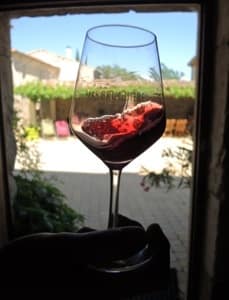
It is hard to believe a whole year has passed since we were in France. And while this photo is not actually of rosé, it was taken at the Lirac winery of Jean-Pierre Lafond. And since it is without doubt the best wine photo I have ever taken, I can’t miss any excuse to post it yet again! As we have mentioned before, Tavel and Lirac border each other just west of Avignon and a bit south of Chateauneuf-du-Pape. From Lirac come some of my favorite red wines on the Planet, and from Tavel come possibly the best rosés on the Planet. So yes, we are very fond of the wines from this little area. This week we are featuring the Lafond Tavel rosé for your Early Summer pleasure, and of course the winemaker referred to it at “the Best Rosé on the Planet!”
Global Warming Guilt Trip: Is it Wrong to Bask While the Planet Suffers???
Okay, it’s been cloudy the last several days, with even a little rain. More would probably be better, especially after the strangely warm and dry summers we have had here in recent years. And yes, I have already worn shorts this year, which is, let’s just say, not a familiar choice in a place where, as Mark Twain is alleged to have put it, “the mildest Winter I ever spent was a Summer on the Puget Sound,,,!” So it is with a mixture of Surprise and Delight (with dashes of Guilt and Worry) that we observed, toasted, and celebrated the Return of the Sun today. It was not Too Hot, but it was, for several hours late this afternoon, Very, Very Comfortable and Beautiful, making this just about the Perfect Place to be, as noted in the the accompanying photos..
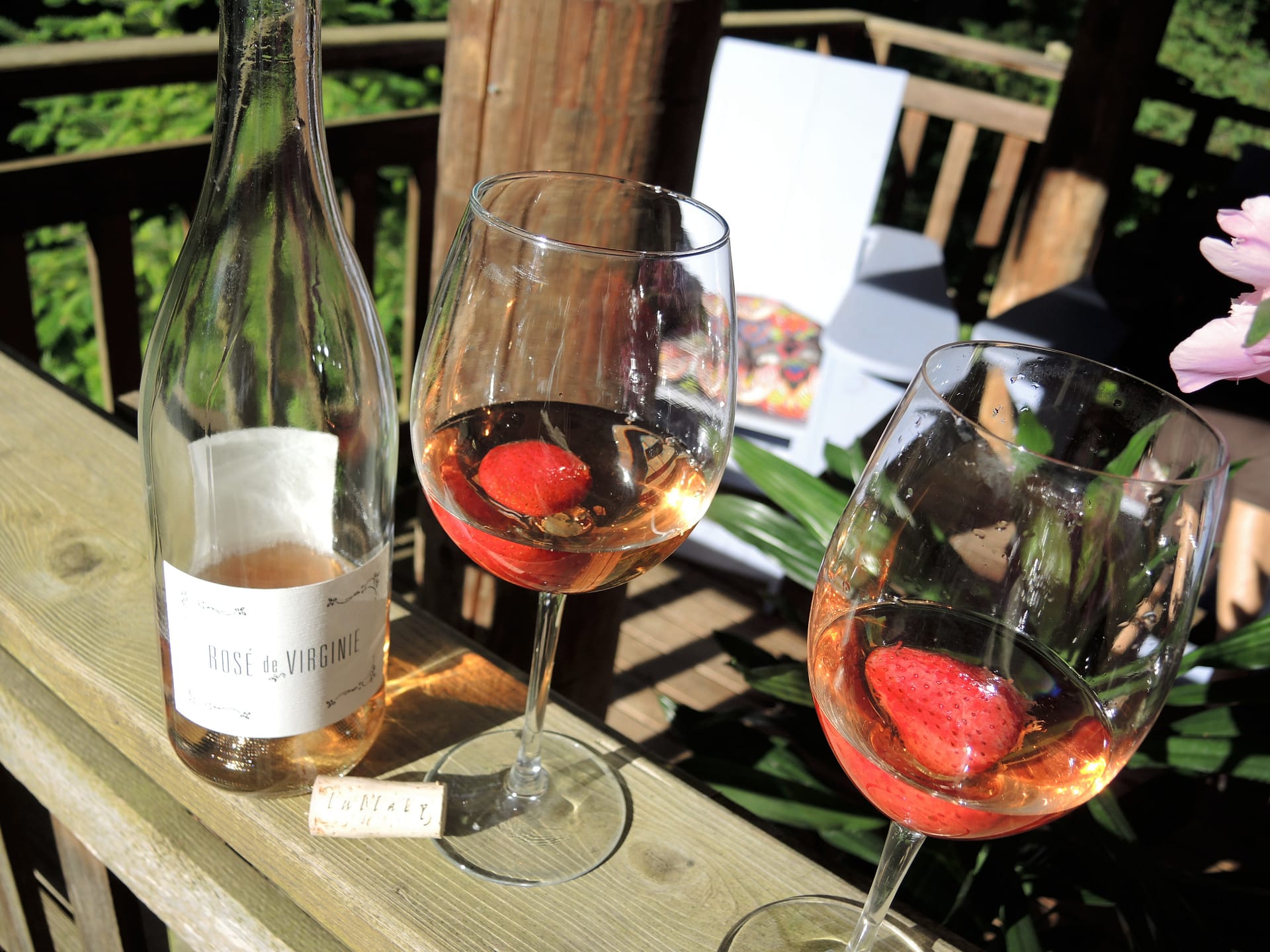 This year’s local Strawberries: beautiful to see, to taste, and yes, to plop into your rosé in the Afternoon Sun…
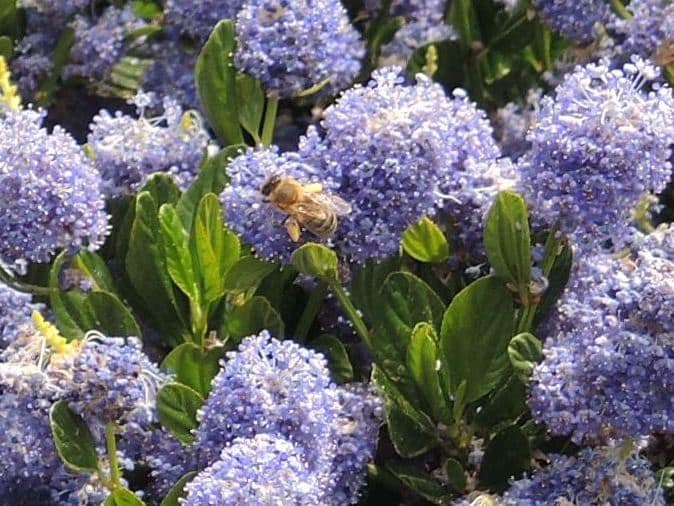 Honeybees at work
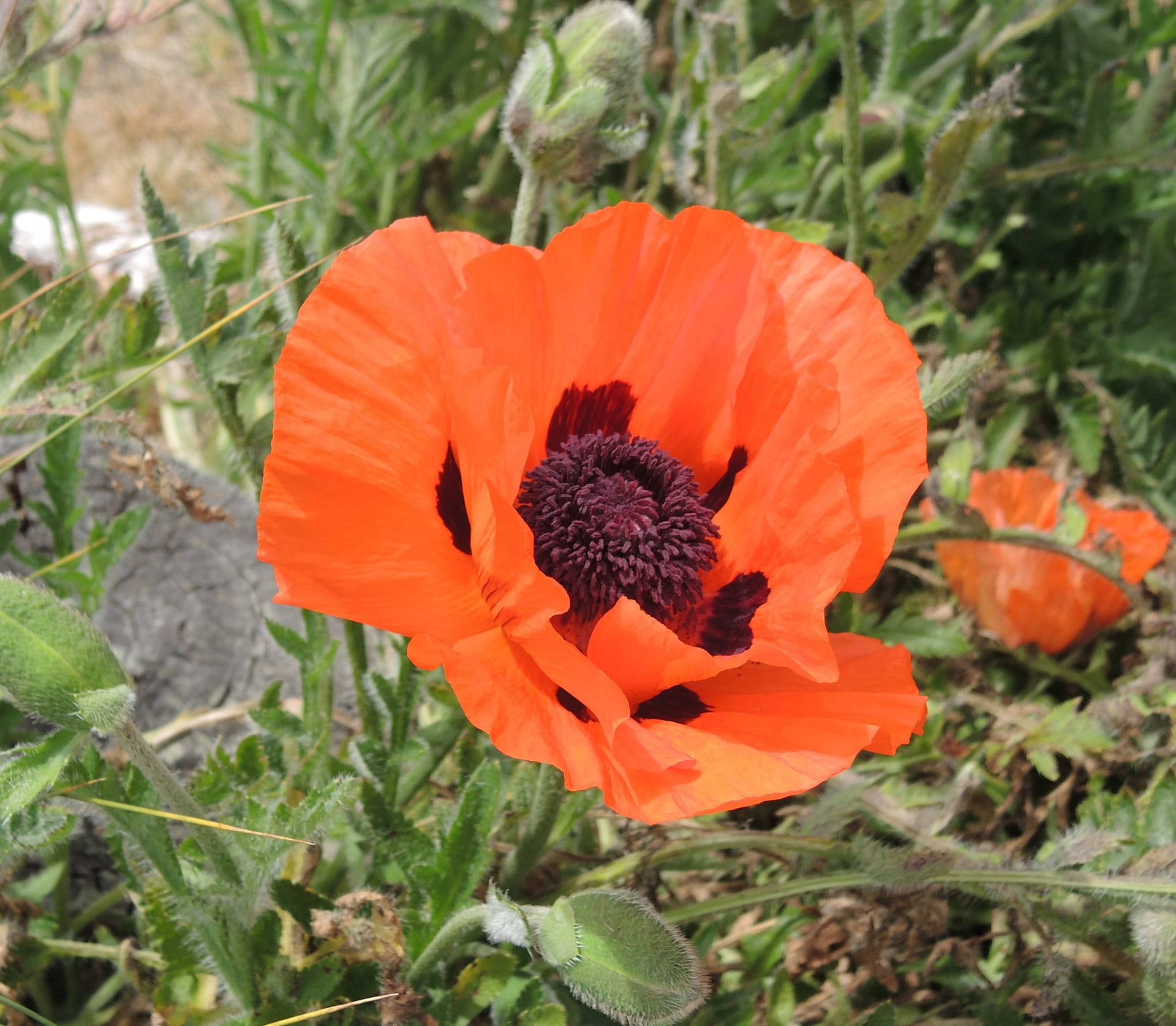 Poppies getting High
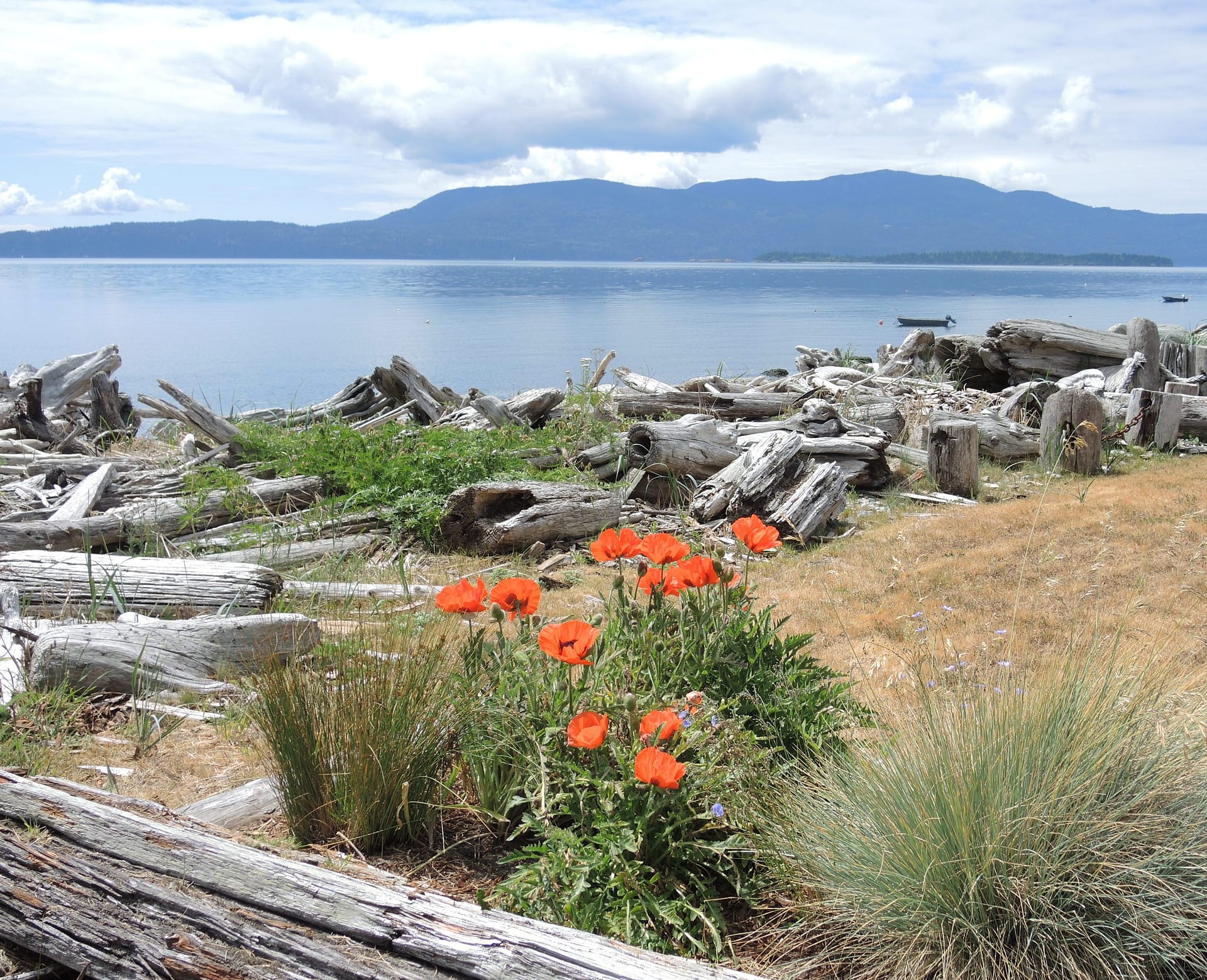 Poppies taking the Long View
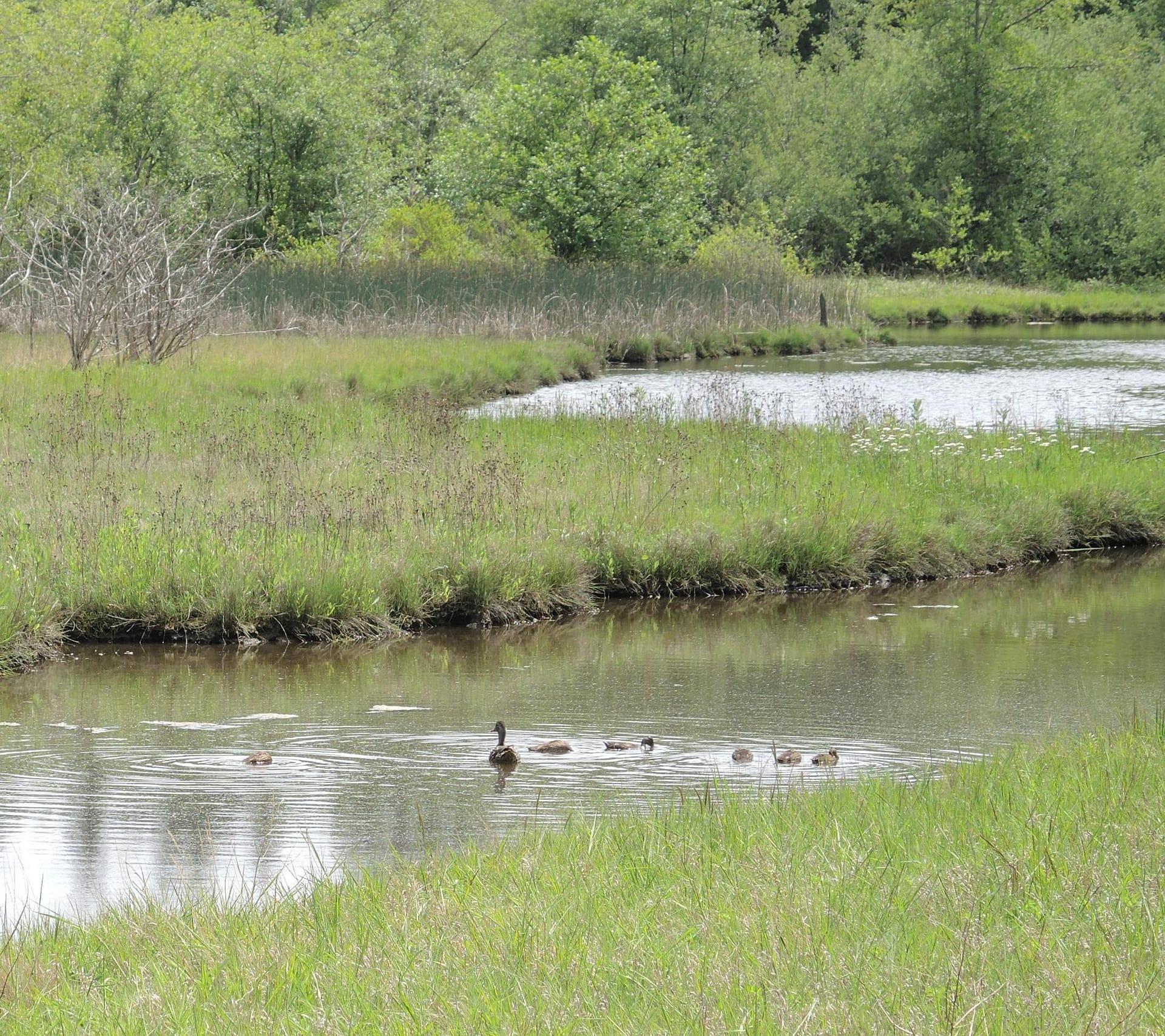 Baby ducks in the slough with Mama
This week’s wine tasting
Kermit Lynch Vaucluse Blanc ’13 France $12
Think crème brûlée and honeysuckle; this viognier-chardonnay blend is round-bodied, yet with tart, stony crispness and knockout aromas of
pear, sun-baked apples, and spicy hints of anise.
Domain Lafond Tavel Rose ’14 France $18
(60% grenache with cinsault, syrah, carignan, clairette, picpoul, bourboulenc, and mourvedre): Dark pink. Pungent red berry and floral aromas, with hints of blood orange, anise and white pepper. Fleshy and broad on entry, offering juicy redcurrant and bitter cherry flavors and a touch of citrus pith. Finishes supple and spicy,
Renegade Red ’12 Washington $11
Nicely crafted blend of Cab, Merlot, and Cab Franc; shows lots of red and black fruits, scents of loamy minerality, and fine grained tannins that are matched with balanced acidity.
Corte Gordoni La Fontane Bardolino ’12 Italy $14
Bardolino is made from a blend of 60% Corvina for structure, weight and a sour-cherry aroma, and 30% Rondinella for the wine’s appealingly fresh, herby flavor. Corvina vines are Guyot trained; all other varieties are spurred Cordon Vines
Caymus Conundrum Red ’13 California $17
Totally California, with lots of bright, bold cherries, raspberries, and a little plum smoothly interwoven to yield a smooth, round, hedonistic palate and VERY easy drinking.
Lummi island wine tasting may 30 ’15
Bread Friday (sign up for preorder list! )
Light Rye – made with a rye sourdough culture, rye flour, and caraway seeds..what many people picture when they think about “rye bread.” – $5/loaf.
Italian Walnut & Honey – About 30% fresh milled whole wheat for a great chewy texture, sweetness from the honey, and additional flavor from toasted walnuts…makes fabulous toast! – $5/loaf.
Rum Raisin Almond Brioche – Delicious buttery brioche buns stuffed with rum-soaked golden raisins and almond paste, then topped with a chocolate glaze. – 2 for $5.
Last Weekend’s Artists’ Studio Tour: Portraits of Lummi Island Women
(click on photos to enlarge)
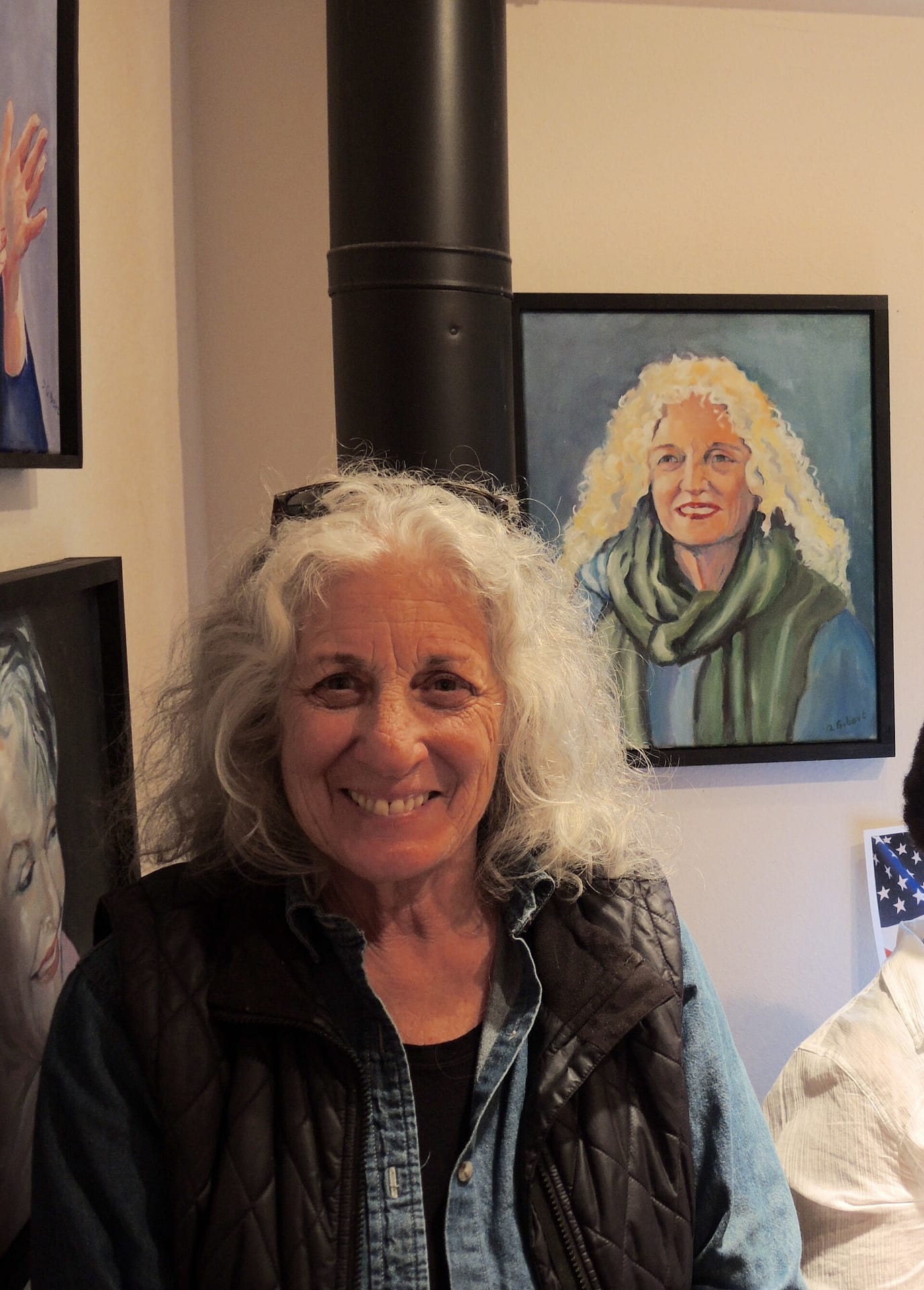
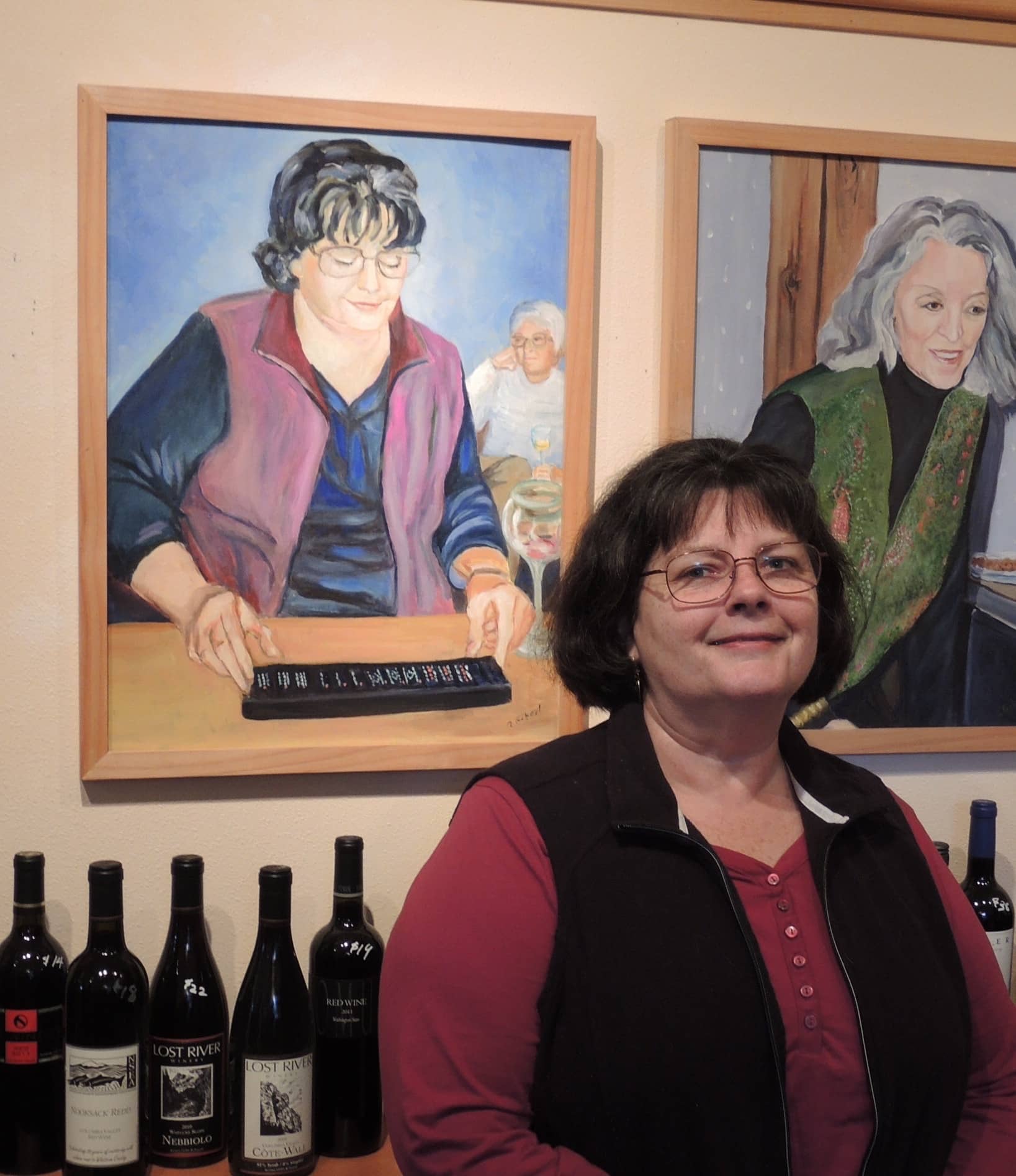
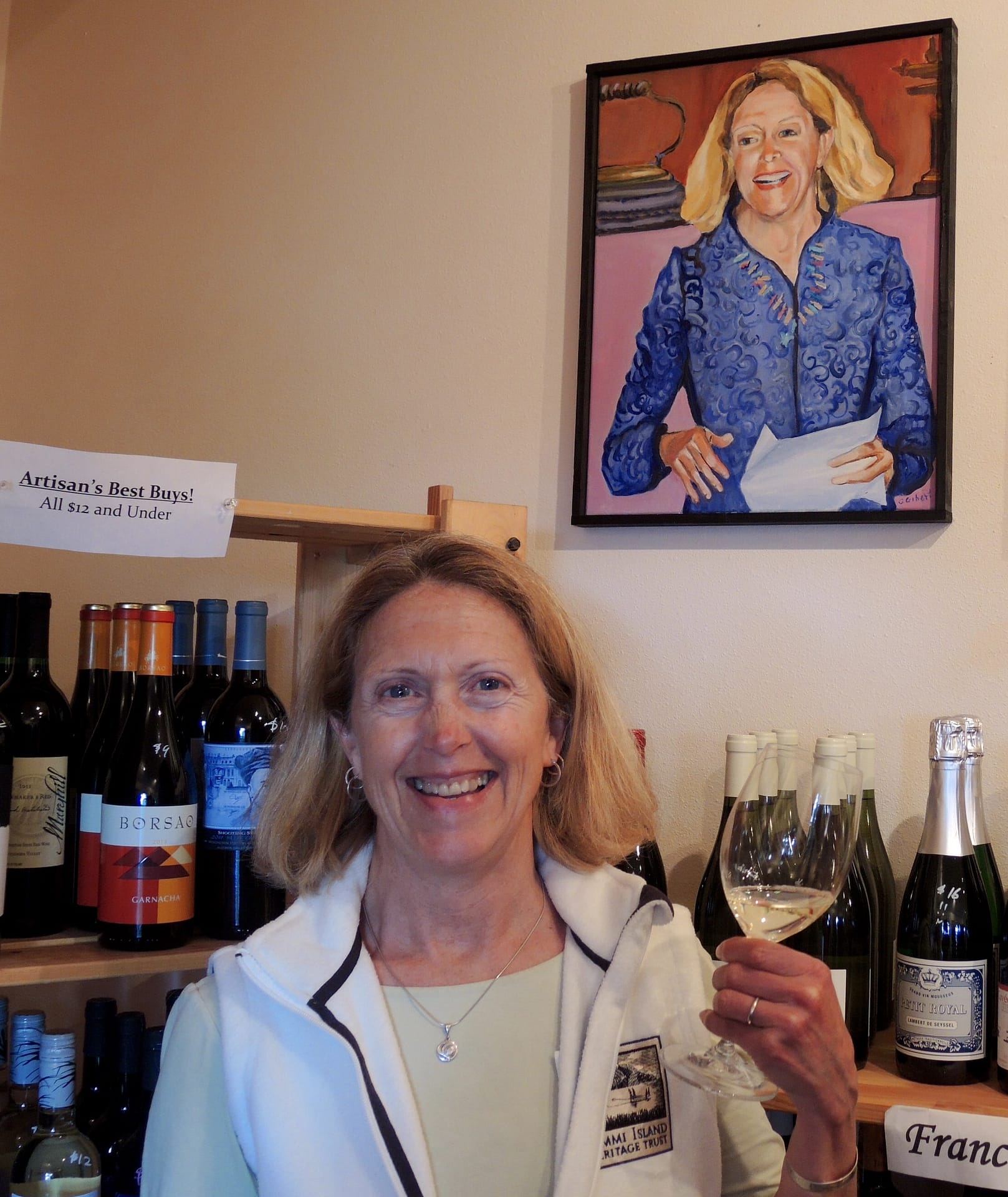
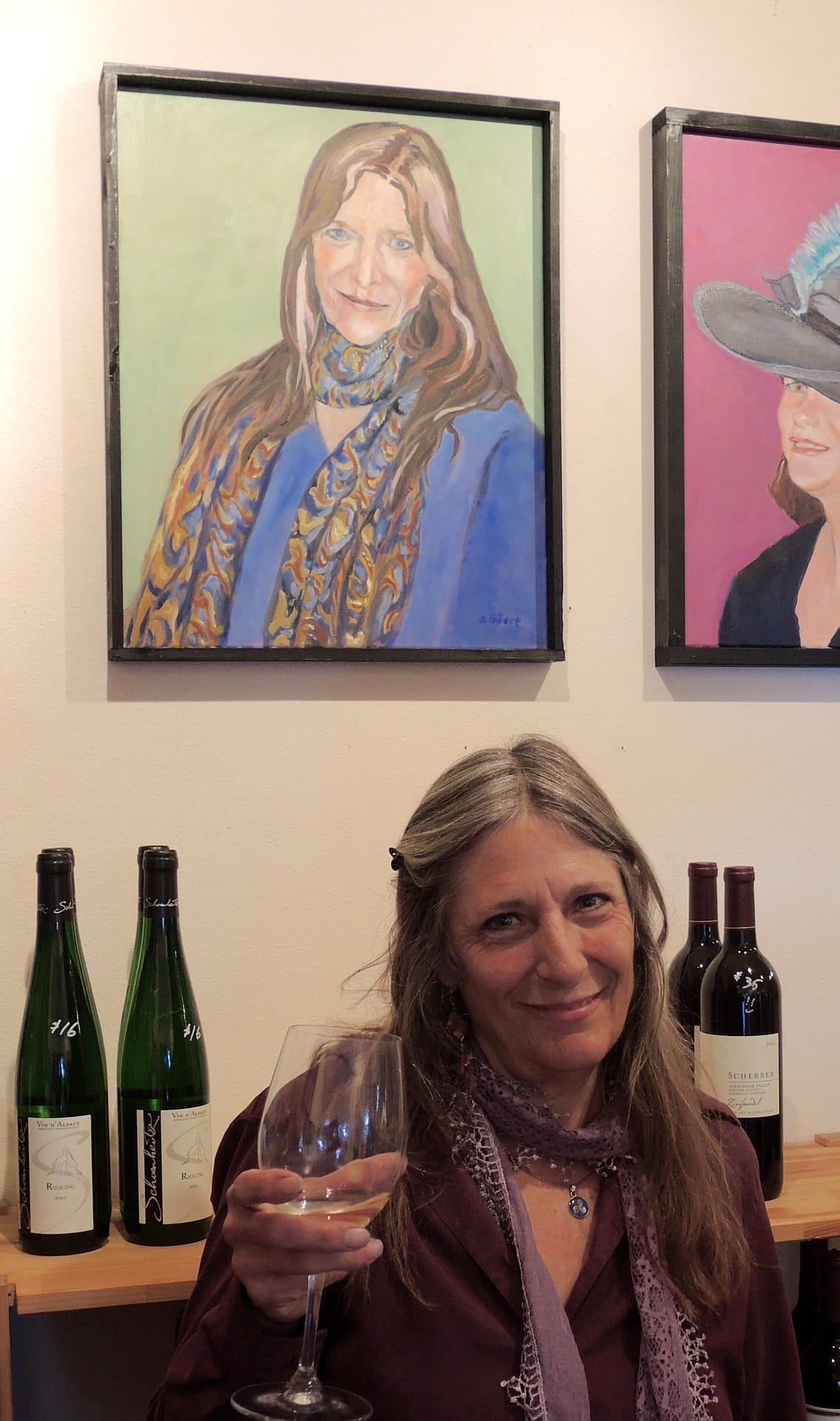
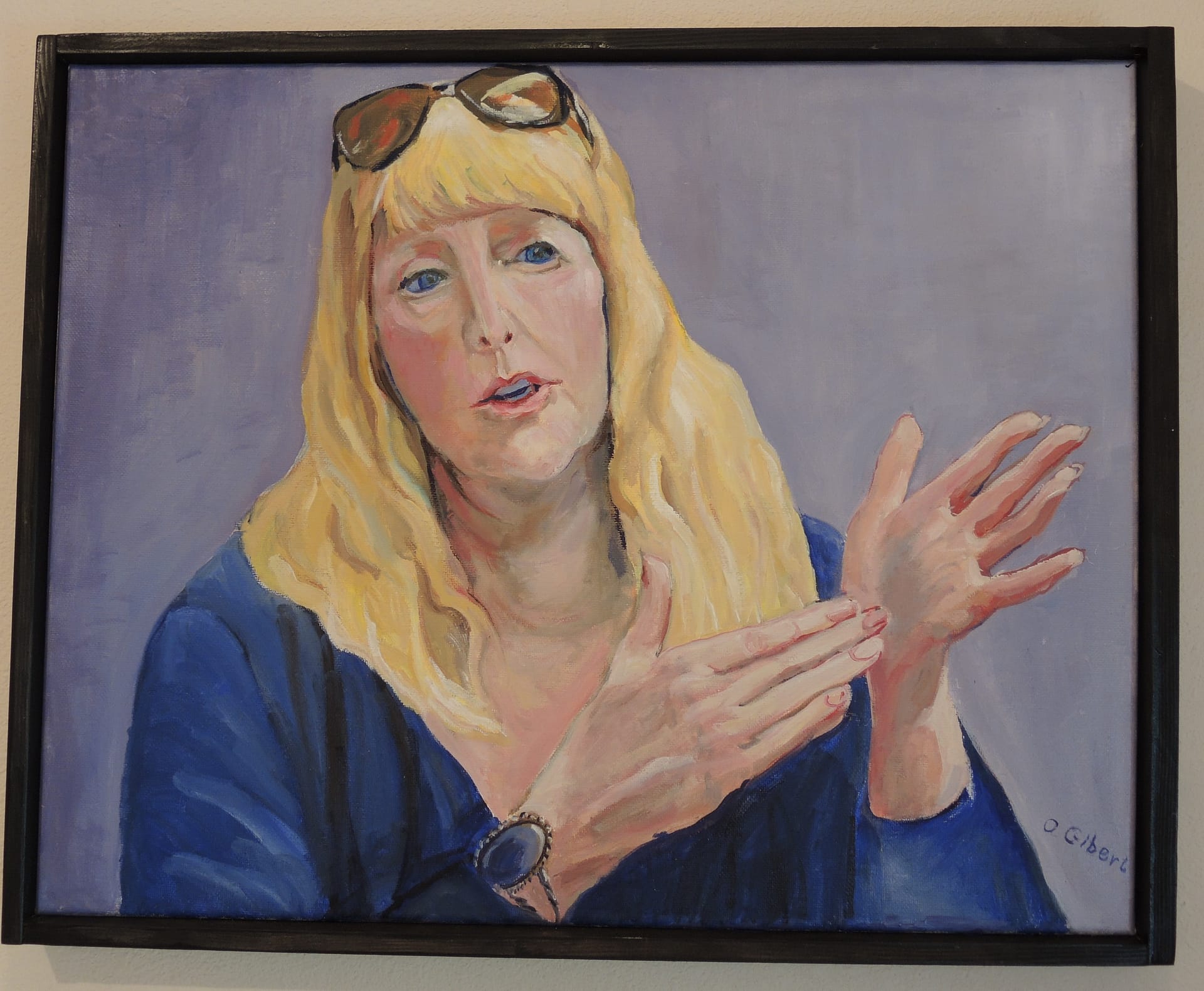
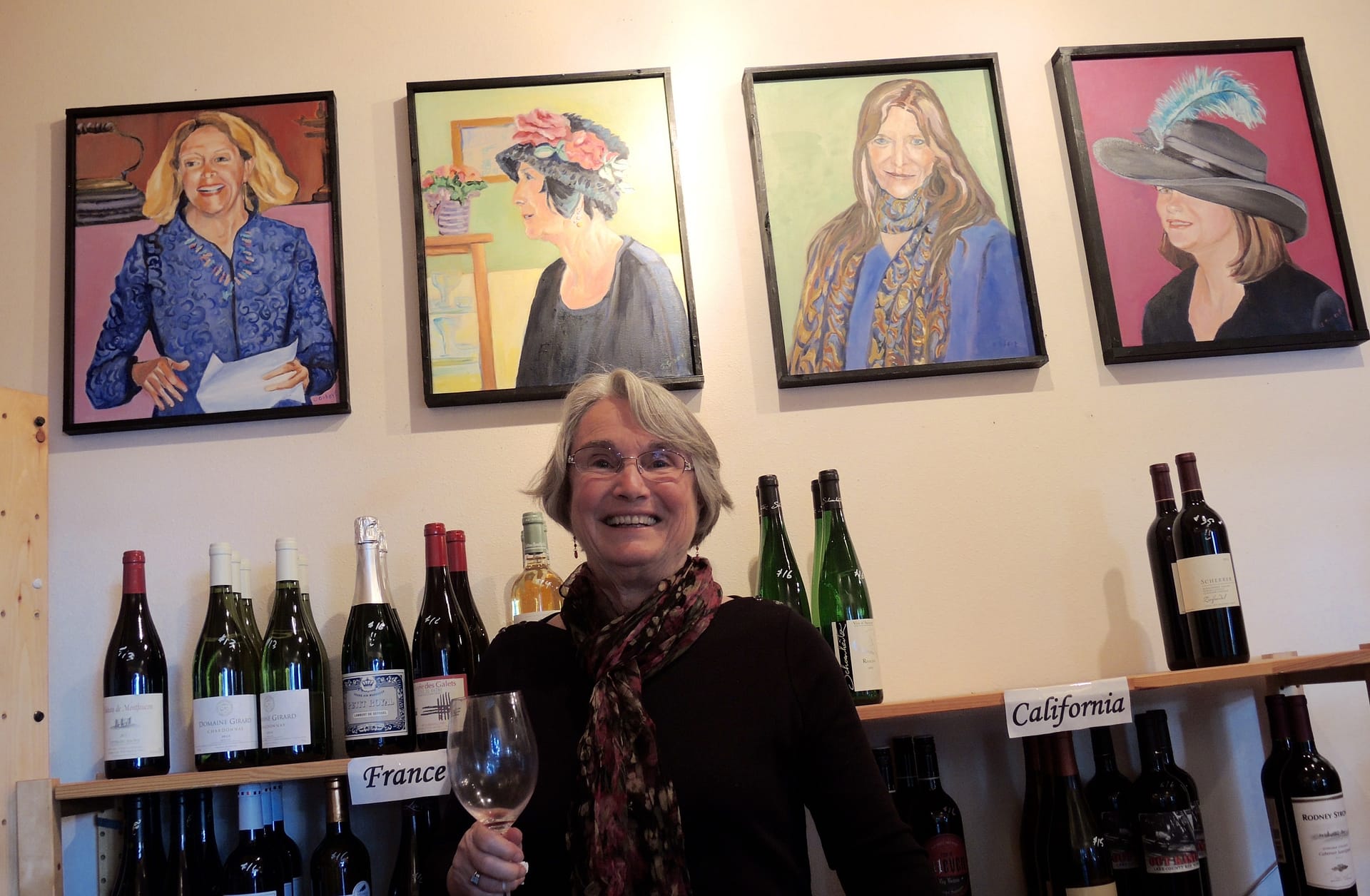 Last weekend’s opening of Anne Gibert’s (photo, left) latest show can only be described as Awesome! The concept, the execution, and the public response are all a testament to the resonance of the show’s theme with the Island Community. We managed to snap photos of a few of the surprised but pleased subjects (the paintings were done from Anne’s photo collection, not sittings).
Shown here with Anne’s portraits are Bobbie, Diane, Becca, and Wanda. Portraits being what they are, a momentary gesture caught in stillness, some are more effective than others at capturing a Signature gesture or Look that everyone recognizes immediately. But as a group, I think we are all extremely impressed and grateful to Anne for coming up with a great idea and executing it so beautifully and professionally!! Wow!!
Rosé Season is Back!
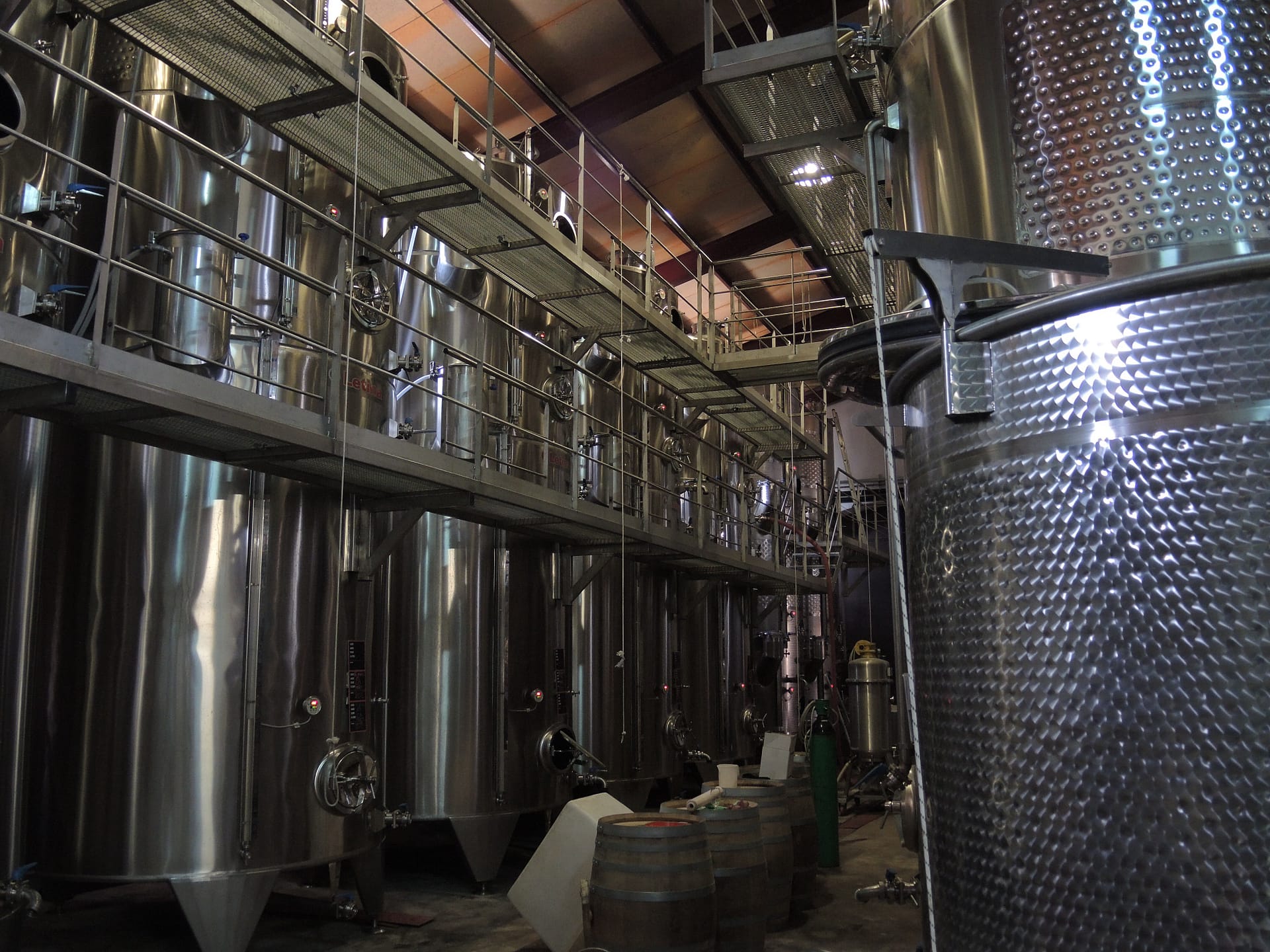 No, this is not a Prison Photo! These are huge stainless steel tanks where rosé takes time to get its breath while it is learning to become wine. After all, it is pretty traumatic being snipped from your parent vine, thrown into a series of containers, frisked for stems, bugs, and foreign matter, and then thrown into a a heap of your fellows that is So Heavy that your Precious Bodily Fluids (that we all Love so much!) surrender to the Higher Cause of Becoming Wine. Yes, it is Cruel and Beautiful at the same time, a Mystery…but hey, just because we can’t understand it doesn’t mean we can’t enjoy it!!!
This is all to review the Perennial Question: How is rosé made, anyway? Well, there are several methods, but the one most used en Provence probably accounts for most of the dry rosés you see on our shelves. Rosé is typically made from red grapes (i. e., usually used to make red wine). When making rosé, however, the juice remains in contact with the skins for only a short period of time, sometimes as little as a few hours, and at a relatively cool temperature, before separating it from the skins. The longer the contact time between the skins and the juice, the darker the color and the more red-wineish the wine becomes. So the very pale rosés (like this weekends’s Bargemone) usually mean that the contact time is very short, with the common goal of producing a wine that is aromatic, fresh, crisp (acidic), and refreshing. And pale!
Another way of looking at it is to realize that contact with the skins is to a very large extent what gives red wine not just its characteristic color, but more importantly the complex chemistry that makes it so infinitely variable and interesting. Click on the link below for a brief video clip of the bottling line at Bargemone we filmed last June…!
Corporate Kindness
 People experience a lot of feelings: curiosity, boredom, wonder, amusement, boredom, fear, silliness, hope, pride, shame, remorse, exultation, and on and on to include just every conceivable feeling that People can experience. Therefore, Logically, since Corporations are legally People, they should be able to Feel Something. But of course they don’t, and can’t. And that is a Big Problem. As an old and dear friend once told me, with great conviction, “Rich, Feelings are Facts.” This is actually a pretty Profound Idea, so let’s take a moment with it.
For whatever reason, our nervous systems have evolved not just with analytical intelligence, but also with emotional intelligence. Our decision-making is governed not simply by deductive and inductive reasoning (the best that Corporations can hope for), but also by Emotional Congruity, which is something we really don’t understand very well, but that corporations are completely incapable of understanding. This “Emotional Congruity” (just because I just made this up doesn’t mean it isn’t important) might be thought of as the “Right Brain” part of how we organize our experience into Meaning.
To succeed in Survival, we humans have been equipped with a brain with a linear component (left brain thinking) and a gestalt component (right brain thinking). Basically, the left brain narrows down options based on linear logic, and the right brain selects from the remaining options based on systems logic, i.e., “what feels right.”
Because Corporations are ever-changing groups of human beings, not One Person, their Right Brains are Committees, and their Left Brains are dysfunctional constructs generally known as PR and HR Departments. Like robots simulating primitive feelings, Corporations are awkward, clumsy, emotionally Blind, and Extremely Dangerous. As with the Pods in the original Invasion of the Body Snatchers, do NOT go to sleep until they are All Eliminated!
This week’s wine tasting:
Anne Amie Amrita White ’14 Oregon $14
Palate-tickling blend of pinot blanc, viognier, and riesling; aromas of quince, Rainier cherry, and lemon; palate of strawberry, raspberry, and nectarine; good match for Asian spices.
Bargemone Provence Rose ’14 France $14
Beautiful pale pink. Bright, mineral-dusted aromas of pink grapefruit and dried red berries. Light and racy on the palate, with tangy citrus and redcurrant flavors. Finishes brisk and dry, with good lingering spiciness and length.
Ontanon Ecologica Rioja’12 Spain $14
100% organically grown Tempranillo; spends five months in barrel before release; Bright cherry and raspberry fruit flavors combine with a subtle element of sweet spice to deliver a a well structured mouthfeel and fine-tuned acidity.
Kermit Lynch Cotes de Rhone Rouge ’11 France $14
Grenache, syrah, carignan, cinsault and mourvedre: Bright violet color; perfumed, spice-tinged nose of dark berries and fresh flowers; exuberant and intensely fruity, with juicy blackberry and cherry flavors that pick up nuances of pepper. licorice, and succulent herbs on the finish.
Masquerade Syrah ’07 Washington $22
From Burgess Vineyard in Pasco, and made here in Bellingham, this syrah is substantial, fruity, and crisp, a great accompaniment to richer fare.
lummi island wine tasting may 22-24 ’15 artists’ studio tour
Bread Friday (sign up for preorder list! )
NOTE: Because the Wine Gallery is hosting the opening of Anne Gibert’s new show for Studio Tour, Friday may be crowded. Just in case, bread pickup will be on the deck outside the shop (weather permitting).
Pain Meunier: (“Miller’s Bread”), includes all parts of the wheat kernel, bread flour, whole wheat flour, cracked whole wheat and wheat germ. A great all around bread. – $5/loaf.
Dried Cherry, Walnut & Buckwheat: Bread flour, buckwheat flour, and some whole wheat, packed with dried cherries that pair well with the buckwheat. – $5/loaf.
Hamburger/Sandwich buns. Soft bun of bread flour with fresh milled white whole wheat and topped with onions. Limited, order early. -4 for $5.
Sablet
 Sablet is a small village about thirty minutes east northeast of Avignon in the southern Rhone Valley of France, with a history of viticulture dating back to the 14th century. Although essentially all of the area’s vineyards were wiped out in the nineteenth century by the phylloxera infestation, it was a resident of Sablet, Francois Leydier, who developed the machine used to graft phylloxera-resistant rootstock onto local vines, a major factor in rescuing the French wine industry. Sablet mostly produces red wines blended from Grenache, Syrah, Mourvèdre and Cinsault. The wines tend to be full bodied, with notes of blackberry, ripe plum, and hints of violets.
The Sablet Rouge we are pouring this weekend is a favorite of ours, which we first tasted at Bertrand Stehelin’s winery in Gigondas a few years ago. We are also great fans of his Sablet Blanc, a blend of roussanne, marsanne, and grenache blanc, and which we like to think we helped bring into Washington by lobbying strongly with the importer who was already bringing in Bertrand’s red wines. We hope you like it as much as we do!
Portraits of Lummi Island Women: Studio Tour Opening Reception Friday. May 22!
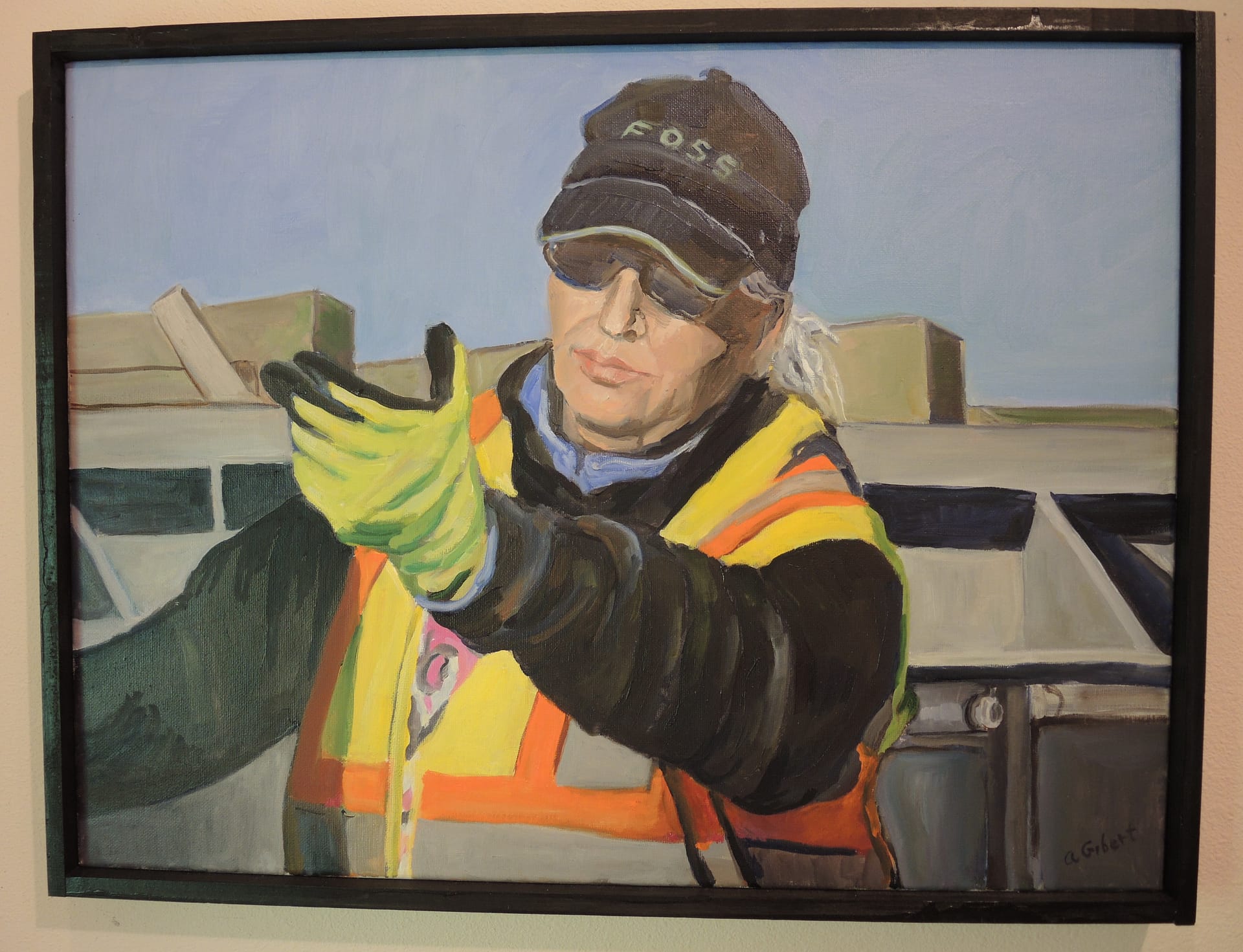 Our guest Artist for Studio Tour this weekend is Anne Gibert showing her latest works, “Portraits of Twenty-three Lummi Island Women.” We just put up the show this afternoon and so now we know Who They Are! The portraits are mostly painted from photos Anne has taken in recent years, so many of the subjects probably have no idea their portraits even exist. We can tell you that any Islander will recognize lots of familiar faces!
We will have a Special Opening Tasting on Friday, May 22, from 4-7. Anne will be in the wine shop to talk about the paintings, and all of you women who are subjects will be entitled to a free wine tasting!
Memorial Day and the Meaning of Time
 When I was a child, each Memorial Day my mother would take us to the cemetery where her parents were buried. It would always take a while to find the graves, which were poorly marked and in an old and untended area. Her father died in 1920, when she was five years old, and her mother in 1933, when she was 18. Which also means that this July would have been my mother’s 100th birthday.
We have all noticed that the older we get the Faster time seems to go. When my mother talked about her parents, I sort of understood that, sure, she had been a child once. But it was a pretty fuzzy concept. It is only through the perspective of our own years that it begins to sink in that, as Alan Watts put it, “being born is like being pushed off a cliff.”
So Memorial Day is essentially about Mortality. There is nothing Heroic about young men killing each other for Glorious Causes. There is nothing Honorable in torturing or killing another human being in the name of Justice. At root there is never any reason for causing another being pain, or injury, or death. We are all fragile and mortal. Wouldn’t it be nice if everyone everywhere would commit themselves to this little idea from the Metta Sutta…
Let none deceive another, or despise any being in any state,
Let none through anger or ill-will wish harm upon another.
Even as a mother protects with her life her child, her only child,
So with a boundless heart should one cherish all living beings,
Radiating kindness over the entire world,
This week’s tasting:
Jardin Unoaked Chardonnay ’13 South Africa $10
Alluring aromas of ripe pears and honey lead to a bright, crisp palate of fresh lemon, honey, and a touch of quinine. Delicious!
Villa des Anges Rosé ’14 France $10
Spicy and focused on the nose, showing fresh citrus and red berry and a hint of white pepper. Dry and nervy on the palate, with refreshing bitter cherry and berry skin flavors.
Pugliano Treggiaia Italy $11
A smooth and satisfying blend of sangiovese, canniolo & cab, serious but friendly, delightful with anything from pizza to lamb chops.
Le Rote Massimo Chianti Riserva ’11 Italy $18.
95% sangiovese, 5% canniolo; lovely notes of cherry, black tea, sage, and red clay, with a delightful rustic flair
Bertrand Stehelin Sablet Rouge ’12 France $22
(70% grenache, 25% mourvedre and 5% syrah): Vivid purple. Bright, perfumed aromas and flavors of candied red fruits and lavender, with subtle spiciness and a soothing palate from a year’s rest in concrete tanks.
 2072 Granger Way