
lummi island wine tasting july 19-20 ’24
Hours, July 19-20 ’24
Friday 4-6 pm Saturday 3-5 pm
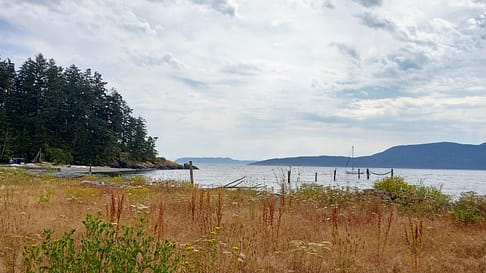
looking south from Legoe Bay
Friday Bread This Week
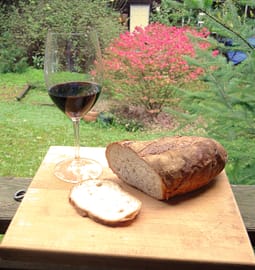
Multi Grain Levain – Made with a sourdough culture and using a flavorful mix of bread flour and fresh milled whole wheat and rye. A nice mixture of flax, sesame, sunflower and pumpkin seeds and some oatmeal add great flavor and crunch. And just a little honey for some sweetness. – $5/loaf
Rosemary Olive Oil – Made with bread flour and freshly milled white whole wheat for additional flavor and texture. Fresh rosemary from the garden and olive oil to make for a nice tender crumb and a nice crisp crust. A great all around bread – $5/loaf
and pastry this week…
Rum Raisin Brioche: A delicious brioche dough full of eggs, butter and sugar. Filled with golden raisins and chunks of almond paste and as if that wasn’t enough, topped with a chocolate glaze before baking. Ooh la la, what’s not to like?!– 2/$5
Island Bakery has developed a rotation cycle of several dozen breads and pastries. Each Sunday Janice emails the week’s bread offering to her mailing list. Orders received before 5 pm Tuesday will be available for pickup at the wine shop each Friday from 4:00 – 5:30 pm. Go to Contact us to get on the bread email list at least a week before visiting!
This week’s wine tasting
Domaine Chibaou Sauvignon Blanc ’22 France $19
Herby aromas of pastis, anise, papaya, with notes of hay and tropical fruits; smooth, nuanced palate and lingering finish, and completely delicious.
Argento Malbec ’20 Argentina $13
From organically grown grapes; deep purple hue; inviting aromas of red berries and flowers, and flavors of plum and sweet blackberry; finishes with ripe, balanced tannins– way over-delivers for its modest price.
The Wolftrap Syrah Mourvèdre Viognier ’21 South Africa $13
Syrah-mourvèdre blend; aromas of ripe plum, red currant, violets, Italian herbs and exotic spices; vibrant flavors of dark berries and spicy plum with hints of orange peel that linger on a juicy finish. (read more)
Wine of the Week: Wolftrap Syrah-Mourvèdre-Viognier ’21 South Africa $13
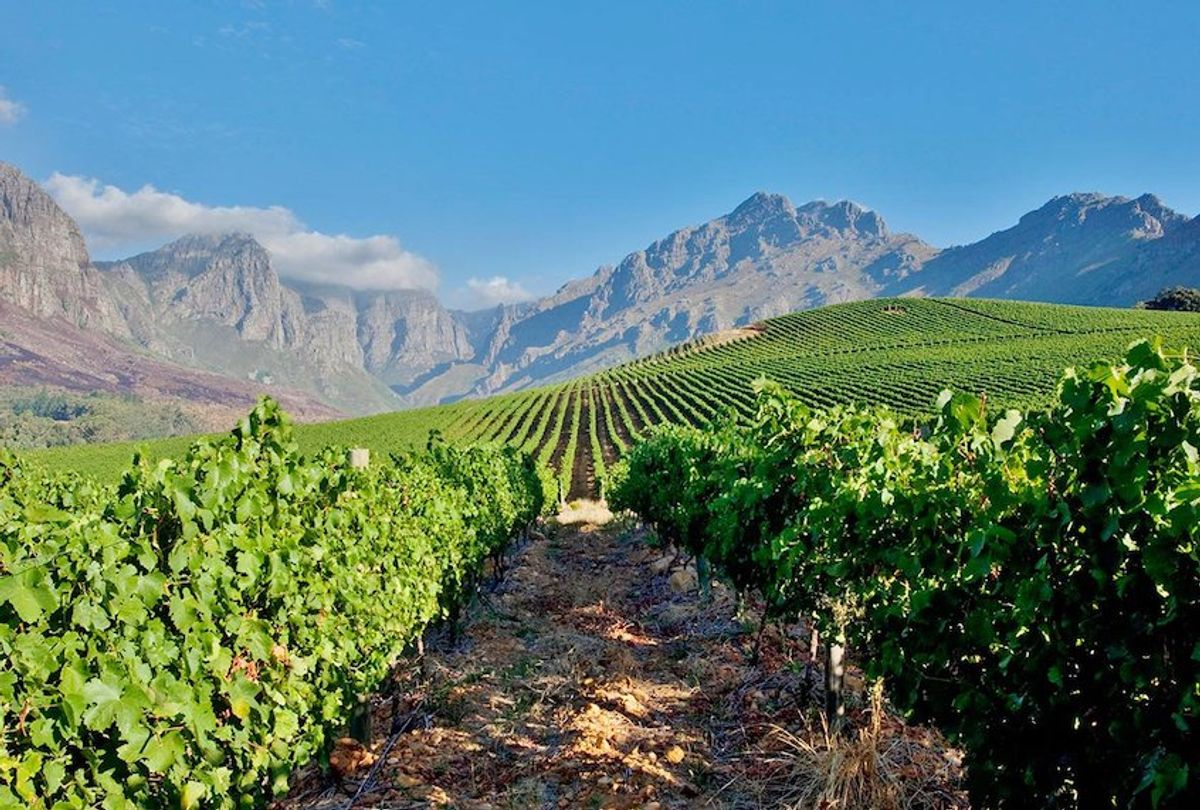
Boekenhoutskloof farm was established in 1776 in the furthest corner of the beautiful Franschhoek Wine Valley of South Africa, about 50 km east of the Cape of Good Hope.
The farm’s name means “ravine of the Boekenhout” (pronounced Book-n-Howed), which is an indigenous Cape Beech tree greatly prized for furniture making. In 1993 the farm and homestead were bought and restored and new vineyards planted for Syrah, Cabernet Sauvignon, Cabernet Franc, Grenache, Semillon and Viognier.
When the farm was founded over 200 years ago, the Franschhoek valley was far wilder than it is today. Though the mountains are still alive with indigenous animals, including the majestic leopard, the only evidence that wolves once roamed here is an ancient wolf trap found here long ago . This wine was named in homage to the mysteries and legends of those days long gone by.
Most of the Syrah in The Wolftrap comes from the Swartland region (photo, left), where it develops its robust character and elegant aromas of violets, ripe plums, and spicy, peppery profile and juicy, fruity character. The Mourvèdre, also from the Swartland, lends a red fruit character and smoky body while a dash of Viognier adds perfume and verve for a rustic Rhône-style blend that seriously over-delivers for its modest $13 price point.
Economics of the Heart: Timothy Snyder’s Four Scenarios

A couple of weeks ago authoritarianism history expert Timothy Snyder posted a very interesting set of scenarios to address the tumult about President Biden’s continuing fitness as the best candidate to assure the defeat of convicted felon and far more mind-impaired Candidate Tweetster in the November election.
If you have been conscious over the last several years, you already know that the fate of human civilization and indeed our entire planet is at stake in this election. This has been spelled out in great detail in Project 2025, the detailed plan of the Heritage Foundation to end American democracy completely. Their new vision for America is an authoritarian state no longer ruled by a Constitutional balance of power among the President, Congress, and the Courts. Instead it will be controlled by a Unitary Executive recently endowed by the Supreme Court with the limitless powers of a King, including the arrest, confinement, and/or execution of any citizen for any reason…even, we presume, a passing moment of petty ennui.
Metaphor #1: Some years ago Canadian environmentalist David Suzuki gave a presentation here in Bellingham about the growing dangers of climate change. Someone in the audience asked “should we be worried about Climate Change…?” Suzuki’s immediate response was “You should be shi**ing your pants!!”
Metaphor #2: Also many years ago I read a read a great book called “Heavy Weather Sailing” by very experienced British sailor K. Adlard Coles. One unforgettable quote spoke with great authority and humility that experiencing a hurricane at sea in a sailboat was something “most devoutly to be eschewed.” Ah, the British penchant for understatement…
So let us make no mistake: There never has been a election anywhere in the world more important than this one. A Tweetster win would realign our country away from our traditional allies and into service to the Bad Guys. It would radically change the global political balance of power. Everything we care about is at stake.
So, with that preface, let’s go back to Timothy Snyder’s proposal. Called “Biden Experiments,” his essay describes, in a curiously calming way, the main challenges of the moment, and four options for addressing them. We found his analysis clarifying and helpful enough to suspect that it is already guiding discussions at the highest levels about campaign strategy between now and November.
So look it over, think about it, and let’s talk about it this weekend at wine tasting!
lummi island wine tasting july 12-13 ’24
Hours, July 12-13 ’24
Friday 4-6 pm Saturday 3-5 pm

racoon in the cherry tree…
Friday Bread This Week
Pain au Levain – Made with a nice mix of bread flour and freshly milled whole wheat and rye flours. After building the sourdough and mixing the final dough it gets a long cool overnight ferment in the refrigerator. This really allows the flavor to develop in this bread. A great all around bread – $5/loaf
Cinnamon Raisin – Made with a poolish of bread and fresh milled rye flour that is fermented overnight before the final dough is mixed with bread flour and freshly milled whole wheat as well as rolled oats. Some honey for sweetness, a little milk for a tender crumb and loaded with raisins and a healthy dose of cinnamon. This is not a rich sweet bread with a swirl of cinnamon sugar, instead the cinnamon is mixed into the dough and flavors the entire bread. It is a hearty rustic loaf. Great for breakfast toast, even better for French Toast – $5/loaf
and pastry this week…
Individual Cinnamon Rolls – Made with a rich sweet roll dough full of eggs, butter and sugar. The dough is rolled out, spread with pastry cream and sprinkled with cinnamon sugar. Then rolled up and sliced into individual rolls for baking. – 2/$5
Island Bakery has developed a rotation cycle of several dozen breads and pastries. Each Sunday Janice emails the week’s bread offering to her mailing list. Orders received before 5 pm Tuesday will be available for pickup at the wine shop each Friday from 4:00 – 5:30 pm. Go to Contact us to get on the bread email list at least a week before visiting!
This week’s wine tasting
Bodega Garzon Albarino Riserva ’22 Uruguay $18
Left on fine lees in stainless-steel tanks for 3 to 6 months, developing fruity aromas of peach and citrus, fresh minerality, marked acidity, and a long and rounded finish.
Marchetti Rosso Conero ’21 Italy $22
Rich and inviting aromas of flowers, plums, brown spices, and hillside brush. On the palate, round notes of cherries, blackberries, cocoa and spice. Culminates in a satisfying, lengthy finish.
Sineann Pisa Terrace Pinot Noir ’16 Washington/NewZealand $30
Made in NZ’s Otago region by Sineann winemaker Peter Rosback; full and ripe, with great structure, good natural acidity and subtle, lingering intensity; plum and black cherry flavors are framed by soft tannins and notes of baking spices, dried herbs and fresh earth.
Wine of the Week: Sineann Pisa Terrace Pinot Noir ’16 $30
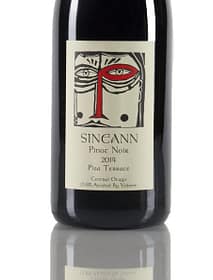
Sineann is one of our favorite wineries, and this pinot noir that their late owner/winemaker Peter Rosbach made for several years in New Zealand is one of our favorite favorites..!
Economics of the Heart: Project 2025 Hits the Newstands

By User The Artifex from flickr – https://www.flickr.com/photos/artnow/184299047/in/set-72157594191072075/, CC BY 2.0, https://commons.wikimedia.org/w/index.php?curid=8851823
For far too long America’s mainstream media (NYT, WaPo, many more, and of course Fox) have squandered so much time on “The Contest” that news coverage of the 2024 Presidential campaign has been squandered on constant criticism of the President’s age, with purposeful minimization of the value and importance of the many economic accomplishments of his Administration. At the same time they have covered every rally, tweet, lie, idiocy, and lunacy of the Tweetster with irresponsible reticence on the existential threat posed by his relentless Ignorance about Everything Imaginable.
Now at last the mainstream press is starting to hear the rising alarm about the Heritage Foundation’s Project 2025, which offers a thousand pages of detailed plans to destroy everything this country has stood for for 250 years. It poses an existential threat to the Entire World by ending Constitutional government in our country, leaving NATO, abandoning Ukraine, and aligning politically with Russia, China, Austria, North Korea and their ilk.
So it is with long overdue and still tentative relief to see that today’s NYT has (finally!) published a major article from the Editorial Board declaring in plain language that he-who-may-only-been-spoken-of-here-with-derision as “the Tweetster, is UNFIT TO LEAD. (Which we have been saying on this blog since February, 2018.)
A rapidly growing public Firestorm is growing, unleashed by the much-hyped release of “Project 2025,“ the Heritage Foundation’s latest policy recommendations for the next Republican administration. Earlier versions of these reports played major roles not only in getting Reagan, Bush I, and Bush II into the White House, but also in providing their Administrations with detailed draft legislation carefully designed to replace moderate and liberal policy with billionaire- and dictator- friendly policies. (see video summary )
More and more people are now getting it that if these guys get control of our government again, everything we believed in and fought for about those words “form a more perfect Union, establish Justice, insure domestic Tranquility, provide for the common defense, promote the general Welfare, and secure the Blessings of Liberty to ourselves and our Posterity” will disappear into a dark, merciless, dystopian Hell.
As we mentioned last week, California Congressman Jared Huffman has launched the Stop Project 2025 Task Force, with an accelerated timetable for researching, analyzing, and sharing data with Congress and the public on the grave dangers of Project 2025 and working to counter them. Hopefully today’s article from the Times means that the word is getting out, and people are getting informed and energized by these grave threats. Indeed, in just the last few days “Project 2025” has gotten more online hits than “Taylor Swift” and “NFL 2024 schedule” combined!
This is serious, existential stuff, with everything our country stands for at stake. We should be as afraid of the Tweetster loyalists (many of whom were in his administration) as we would be of Tolkien’s Nazgûl ring-wraiths, (image above) the Essence of Evil, devoid of compassion, obsessed with Ego and Power.
lummi island wine tasting july 5-6 ’24
Hours, June 28-29 ’24
Friday 4-6 pm Saturday 3-5 pm
Last night in late twilight we noticed this eagle high in a fir tree about 100 ft away, further shadowed by a thicket of branches. It was without a doubt the biggest eagle any of us had ever seen! Ulee saw it, too, and just stared without barking.
They DO have a Presence…!



Friday Bread This Week
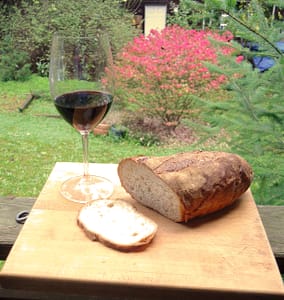
Barley, Whole Wheat, & Rye Levain – a levain bread where the sourdough culture is built over several days and allowed to ferment before the final dough is mixed. Made with bread flour and freshly milled whole wheat, barley and rye flours. – $5/loaf
Rye w/ Currants, Pumpkin Seeds & Cracked Coriander – a bread that I haven’t made on a regular basis. Made with a starter fed with rye instead of wheat flour, the final dough includes bread flour and freshly milled rye flour, some molasses for sweetness and pumpkin seeds, currants and cracked coriander seed make for an interesting flavor profile – $5/loaf
and pastry this week…
Pain aux Raisin – made with the same laminated dough as croissants. The dough is rolled out, spread with pastry cream and sprinkled with a mix of golden raisins and dried cranberries that have been soaked in sugar syrup. Rolled up and sliced before baking. – 2/$5
Island Bakery has developed a rotation cycle of several dozen breads and pastries. Each Sunday Janice emails the week’s bread offering to her mailing list. Orders received before 5 pm Tuesday will be available for pickup at the wine shop each Friday from 4:00 – 5:30 pm. Go to Contact us to get on the bread email list at least a week before visiting!
This week’s wine tasting
Jacob Williams Viognier ’22 WA $32
Melon, pineapple, & confectionary notes on the nose. Green tropical fruits on the palate – a little bit of pineapple and mango. Smooth and rich texture throughout.
Monte Tondo Veneto Corvina ’20 Italy $12
Organically farmed; bright nose of fresh cherries and black pepper; fresh, light, and lively palate of cherry, dark chocolate and spice, with supple, well-integrated tannins and a smooth, seductive, slightly spicy finish. Our go-to red wine for summer lunch on the deck!
Cote 125 Corbieres Rouge ’19 France $15
Classic Corbieres blend of carignan, grenache, syrah, cinsault; rich and concentrated with blueberry and strawberry aromas and flavors, with notes of spices and black pepper, good balance, and a long, smooth finish.
Wine of the Week: Jacob Williams Viognier ’23 WA $32
 For some reason a lot of people never get around to tasting viognier, a white French varietal most prevalent in the Northern Rhone region of France. It is now grown across the world, including here in Washington. Styles range from bright, light, and crisp with mouth-watering acidity to voluptuous, nuanced, and lingering. In many places, including Washington, a few percent of viognier is added to red wines, particularly syrah.
Viognier carries an aura of refined elegance compared to, say, chardonnay. You can dress up chardonnay with extended periods in new oak, time on the lees, and other methods, and it can be wonderful. But there is a reason why wine critic Karen Macneil, in her “Wine Bible,” describes viognier as “the most drippingly sensuous white wine.”
Our experience with the viognier at Jacob Williams when we first visited a couple of years ago was definitely in that category. The latest vintage might need a little more time in the bottle, but it is already showing better than many!
Economics of the Heart: The War for Everything Has Begun

Heritage Foundation President celebrates the death of Liberty with Supreme Court AI image from Davinci
The Real Insurrection against our democracy has been afoot for several decades now, with lots of preparation from the the John Birch Society, the legalization of lying talk-radio slanderers (Limbaugh and ilk made it ubiquitous 24/7), and of course Fox news, which only tells lies, usually beginning early morning with the Lie of the Day, repeated over and over and over for 24 hrs. The other Big Player is the Heritage Foundation, as discussed in detail in this in-depth interview by Lulu Garcia-Navarro with new Heritage Foundation President Kevin D. Roberts. Check it out…this man’s words radiate Evil like a Tolkien wraith, steaming with existential Menace. Make no mistake: these guys intend to control everyone and everything, with cold, business-school trained concern only for the bottom line and vast indifference for collateral casualties.
A recent BBC post offers a readable summary of the implications of Project 2025. Its goals are to take away or restrict every Constitutional freedom that we Americans have enjoyed, treasured, and defended for over 200 years. No, we are not making this up; ending democracy is the new Republican platform.
The recent Supreme Court removal of all legal constraints on Presidential “official acts” opens the door for a dictatorial Presidency with no rules at all, a Fascist state where citizens have no legal rights, no protection from politically applied arrests and punishments, while the President remains completely above scrutiny. Project 2025 is designed to guarantee the Far Right to gain and hold complete power, end elections for good as it implements its profoundly dystopian vision.
Therefore, given the ongoing leakage of hope on the left, it is a relief to read Joyce Vance’s most recent post in her daily “Civil Discourse” post, describing in detail her conversation with California Congressman Jared Huffman, founder of the Stop Project 2025 Task Force. The project has an accelerated timetable for researching, analyzing, and sharing data with Congress and the public on the hidden dangers of Project goals and methods, and work to counter them. It’s a late start, but shows promise.
That, together with the peculiar realization that our current President now has all the powers of the “Unitary Executive” the Supreme Court just awarded to “the former guy,” is a flickering glimmer of hope in our unfolding existential battle to preserve democracy. Surely Uncle Joe now has the authority to steal the election himself and lock up the other guy, yes..? I mean, isn’t that what the Justices want him to do…???
lummi island wine tasting june 28-29, ’24
Hours, June 28-29 ’24

Fridays 4-6 pm Saturdays 3-5 pm
Friday Bread This Week
Multi Grain Levain – Made with a sourdough culture and using a flavorful mix of bread flour and fresh milled whole wheat and rye. A nice mixture of flax, sesame, sunflower and pumpkin seeds and some oatmeal add great flavor and crunch. And just a little honey for some sweetness. – $5/loaf
Polenta Levain – Also made with a levain, known as sourdough, in which the sourdough starter is fed and built up over several days, then mixed with bread flour and polenta in the final dough mix. This bread is a nice rustic loaf with great corn flavor. – $5/loaf
and pastry this week…
Gibassiers – A traditional french pastry recipe from southern France. Made with a delicious sweet dough full of milk, butter, eggs and olive oil, with orange flower water, candied orange peel and anise seed. After baking they are brushed with melted butter and sprinkled with more sugar. – 2/$5
Island Bakery has developed a rotation cycle of several dozen breads and pastries. Each Sunday Janice emails the week’s bread offering to her mailing list. Orders received before 5 pm Tuesday will be available for pickup at the wine shop each Friday from 4:00 – 5:30 pm. Go to Contact us to get on the bread email list at least a week before visiting!
This week’s wine tasting
Jacob Williams Chardonnay ’22 WA $32
Whole cluster pressed, barrel fermented on lees and stirred regularly during aging; fruity aromas of cantaloupe and Bartlett pears; lively on the palate with notes of lemon citrus, vanilla,and chalk.
Phantom Red Blend ’20 WA $17
Petite Sirah- Zinfandel blend delivers palate of dark blackberry and boysenberry with pepper notes and on a balanced structure with tantalizing layers of baking spices sandt velvety tannins…a consistent local favorite!
Rocks of Bawn Shafts and Furrows Red ’20 WA $18
88% Merlot from Frenchman Hills Vineyard (south-facing & high elevation); 12 % Merlot from Southwind Vineyard in Walla Walla (full-bodied and rich); 6% Cab Sauv from Red Mountain & Horse Heaven Hills; 4% Cab Franc and a spicy 2% Malbec from the iconic Red Willow Vineyard in Yakima Valley.
Economics of the Heart: Only You Can Save Us, Obi Juan Merchan!

Sometime in the last couple of days it occurred to me that our country and our world entered a strange and deeply disturbing sur-reality when the Tweetster came down that escalator, one no one could have made up. We have spent most of the last decade imprisoned in a disturbing, Monty Pythonesque, never-ending Mad Hatter’s Tea Party. Like Rod Serling’s Twilight Zone of our youth, our world was hijacked by one insane man with an addiction for constant attention. In all that time there has been no place you can go to escape the incessant tweets and lies, the self-aggandizement. The toxicity of the Tweetster.
Right at this moment the “debate” between him and Uncle Joe is being broadcast in the other room. It is unbearable. Everything the man says is not just a lie; it’s an insane lie. NOTHING he says is true…NOTHING, not a whit, not even a single word. Ever. No wonder the Republicans are all crazy, and no wonder our entire world is poised on the brink of destruction.
The growing feeling in a lot of our guts is that EVERYTHING depends on whether or not Judge Merchan sends the Tweetster to jail. My personal desired outcome is that 1) he gets a month in jail for each of the counts of which he has been convicted, and 2) that he is barred from public speaking for the entire period. No tweets, no interviews, no TV, no film, no radio…you know, like anyone else in forced confinement.
It’s not because I want him or anyone else to suffer. It’s because all the rest of us on the planet need a break, and because in the terrifying event that he should somehow get back in the White House it will mean the End of the World. Yes, seriously, the end of human life in this little corner of the Universe for sure, and probably most species bigger than a pea.
Because he is now the tool of a much larger conspiracy to destroy our democracy completely, including tearing up the Constitution, ending elections at every level, and turning our democracy into a dystopian Fascist state controlled entirely by and for radical white Christian men with Bibles and MBA’s. They don’t know and don’t care about climate change, environmental protection, fairness, justice, or science.
Yes, I am very pessimistic. Which is why Judge Merchan may be the only person in the world who can save the Future. Not to, you know, put any pressure on him…
Yes, it’s times like these that bring friends together for spirited chats in the friendly atmosphere of a neighborhood wine shop!
 2072 Granger Way