
Winemaker Antonio Lamona began making wine in the late sixties, cultivating organic vines from the beginning. Located just 3 km uphill from the Adriatic in the small, coastal province of Teramo, his farm is entirely self-sustaining, producing their own salami, bread, vegetables, olive oil, and cheese. The vineyards lie in a unique microclimate between the Adriatic Sea and the Apennine Mountain with 300 days of sun per year and comparatively few climate variations.
Comments Off on lummi island wine tasting oct 27 ’23
lummi island wine tasting oct 27 ’23
Hours this weekend
Open Friday 4-6
This week’s wine tasting
Chapoutier Belleruche Blanc ’21 France $14
Delicious blend of grenache blanc and roussanne; fragrant and perfumed with a light, grilled-lemon note over ripe melon,with a lingering palate of rich white peach.
Jordanov Vranec ’20 Macedonia $12
Aromas of ripe berries with notes of clove, nutmeg and cardamom. In the mouth it is full bodied with ripe dark fruit and hints of herbs with a noticeable dark chocolate edge on the well-structured finish. Enjoy with cheese, beef, lamb dishes or grilled sausage.
Longship Lady Wolf Malbec ’20 Washington $27
100 % malbec; unfolds with dark, enchanting notes of blackberry, grilled plum, and jammy raspberry with accents of orange peel, vanilla, and tobacco spice, finishing with balanced structure, plush texture, and a lengthy finish.
Friday Bread Pickup This Week!
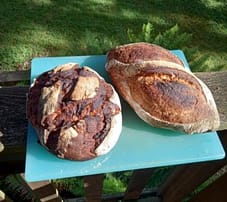
Pain au Levain – Made with a nice mix of bread flour and freshly milled whole wheat and rye flours. After building the sourdough and mixing the final dough it gets a long cool overnight ferment in the refrigerator. This really allows the flavor to develop in this bread. A great all around bread – $5/loaf
Pain Normand – a bread that brings in the flavor of french Normandy region which is known for its apples. Made with some fresh milled whole wheat and rye flours as well as bread flour then mixed with apple cider as well as dried apples, for a delicious artisan bread! – $5/loaf
and pastry this week…
Pumpkin Spice Muffins– Topped with a streusel made with butter, brown sugar and pumpkin seeds and filled with a cream cheese filling. Yum! (some have called these ‘crack muffins’ because they are so addictive – 4/ $5.
Island Bakery has developed a lengthy rotation cycle of several dozen breads and pastries. Each Sunday Janice emails the week’s bread offering to her mailing list. Orders received before Wednesday will be available for pickup at the wine shop each Friday from 4:00 – 5:30 pm. Go to Contact us to get on the bread email list.
Wine of the Week: Longship Lady Wolf Malbec ’20 Washington $27
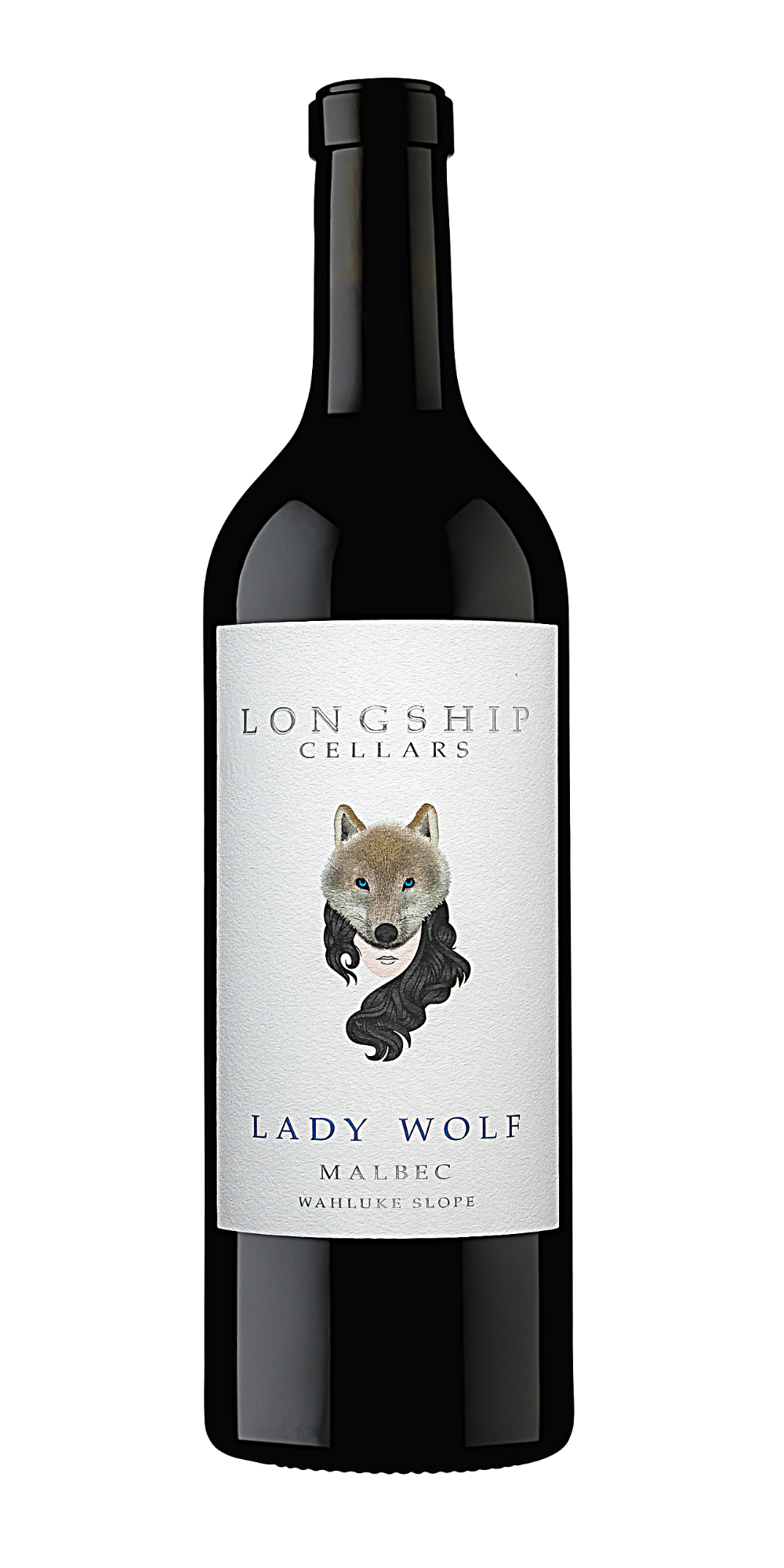
Longship is a fairly new family-owned winery in Richland, in the heart of Washington wine country. Established in 2013, it has focused on producing big, hand-crafted, barrel-aged, red varietals like tempranillo, malbec, syrah, cabernet sauvignon, with at least 60% proportion aged for 18 months in new oak barrels.
The name “Longship,” and the adoption of the Viking Longship as the winery’s logo is a nod to the family’s Scandinavian heritage and the winery’s ongoing journey to produce some of the finest wines in the Pacific Northwest.
The Richland tasting room was added at the end of 2016, not just to feature their wines, but also, as is the case here at the Wine Gallery, to create a social space where friends can gather to relax in a convivial environment while sharing delicious handcrafted wine.
We took an immediate liking to the wine when we tasted it a couple of weeks ago, and it is a consistent crowd-pleaser!
Economics of the Heart: Intimations of Collapse

In “Collapsed Trestle Bridge on Northern Pacific Railroad, 1903 – Mullan, Idaho (38656465081)” by Steve Shook from Moscow, Idaho, USA is licensed under CC BY 2.0. see larger view
In my imagination this week’s news might play something like this out in the Maine boonies, when an old fahmah comes home from the monthly trip to town for shoppin’ and shares the latest news with his wife…
“Heard we got ouhselves a new House Speakah in Congress, guy named Mike Johnson. “
“You don’t say.”
“Shuah do. People say he’s one o’ them Magat people that’s been causin’ so much trouble past several yeahs, working behind the scenes to change the 2020 election results in a bunch of states. So the Magats love him, but the public has mostly nevuh heard of him.”
“So what did people say?”
“Well, the Magat folks like him cuz he passes as a reasonable guy, while behind the scenes he’s quietly attacking our entire domocratic system at the foundations. They get theah Magat Ninja Speakuh, perfectly disguised as the boyish bookkeepuh down the street, while setting up the steal of the 2024 election for theah billionaih donahs.”
“Hmm…I just got one question… what possible good can come from that?
“Beats me, dahlin’…I ain’t a Magat.”
****
The reality is that our new Speaker has a lot more in common with Leonard Leo than with bombastic bomb throwers like Gaetz and Jordan. Press reports everywhere are outlining the dangers he has already posed to our democracy. Working behind the scenes, Johnson was instrumental in setting up legal challenges to the 2020 election results in several states and even bringing a case to the Supreme Court.
How scary is that? Rudy Giuliani with an actual working brain? Roger Stone with a House seat? We shall see. But on the face of it, he is every bit as worthy as everyone else to have been indicted in the Georgia election-rigging trial.
Meanwhile, the better news in recent days is the mounting evidence that the Georgia election-tampering trial, the Florida secret documents case, and the New York fraud case are not going well for the Tweetster, and the first rats are beginning to jump off his sinking ship…or as in the metaphor of the old photo above, of a 1903 train wreck in Idaho.
Comments Off on lummi island wine tasting oct 19 ’23
lummi island wine tasting oct 19 ’23
Hours this weekend
Open Fridays 4-6
This week’s wine tasting
Girot Ribot Masia Parera Brut Rose Cava Italy $16
Delicate perlage, deep minerality, and intoxicating white flower and baby mushroom aromas make this wine memorable and delightful.
La Quercia Aglianico ‘22 Italy $14
Full bodied with notes of ripe plum and white pepper on smooth, fine-grained tannins. A lovely match with a wide range of savory dishes.
Masseria del Feudo Nero d’Avola Sicilia ’21 Italy $19
“Cherry, plum, vanilla and toast make for a well-balanced wine of medium intensity that goes down smooth thanks to its soft tannins and silky consistency. It would pair beautifully with stewed meats or pork dishes.
Friday Bread Pickup This Week!
Le Pave d’autrefois – Translates roughly as old paving stones, a ciabatta like bread with a lot of hydration so is simply divided into approximate squares – hence the paving stones name. Made with a mix of bread flour with fresh milled whole wheat, rye and buckwheat flours for hearty whole grain goodness. A great artisan bread -$5/loaf
French Country Bread – A levain bread made with mostly bread flour, fresh milled whole wheat and and a bit of toasted wheat germ. After building the levain with a sourdough culture and mixing the final dough it gets a long cool overnight ferment in the refrigerator. This really allows the flavor to develop in this bread. Not a refined city baguette, but a rustic loaf that you would find in the countryside.– 5/loaf
and pastry this week…
Individual Cinnamon Rolls – These are made with a rich sweet roll dough that is full of eggs, butter and sugar. The dough is rolled out, spread with pastry cream and sprinkled with cinnamon sugar. Then rolled up and sliced into individual rolls for baking. And boy are they delicious!! I can only make a limited number so get your order in early so you don’t lose out –
Island Bakery has developed a lengthy rotation cycle of several dozen breads and pastries. Each Sunday Janice emails the week’s bread offering to her mailing list. Orders received before Wednesday will be available for pickup at the wine shop each Friday from 4:00 – 5:30 pm. Go to Contact us to get on the bread email list.
Wine of the Week: La Quercia Aglianico ‘22 Italy $14
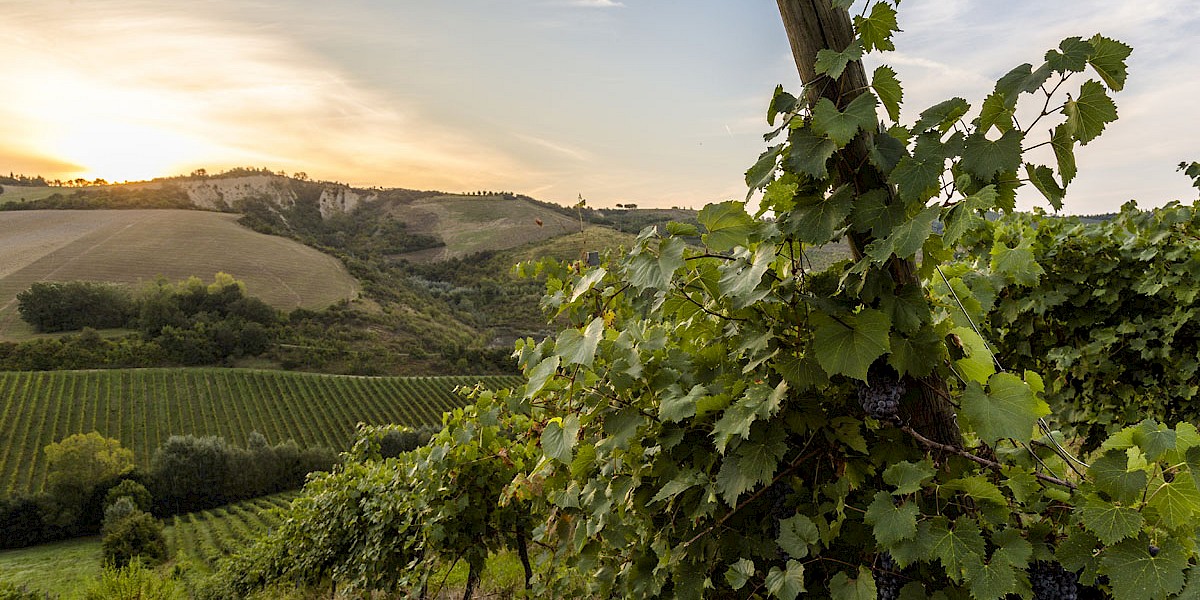
La Quercia vineyard in Abruzzo
La Quercia consistently produces great wines from low-yield vineyard management by constantly cutting back the vines for the best quality fruit, taking no shortcuts, consistently producing expressive, balanced, 100% organic wines.
Economics of the Heart: Rollerball, Leonard Leo, and a World in the Crosshairs
 We have written before about the prescience of the 1975 sci-fi film Rollerball in imagining what a corporate autocracy of the future might look like. The basic story is that Jonathan, played by James Caan, has become so influential a global star in the violent game of Rollerball that he he has become a threat to corporate stability and is being involuntarily retired. In this scene (sorry, audio only) Jonathan (not the brightest bulb in the ceiling) is in the high-rise office of one of the handful of corporate leaders that run the world (played unforgettably by John Houseman with his deliberate, authoritative British diction). He briefly describes how the Majors (corporations) have replaced governments, eliminated poverty, war, and other inconveniences…”and all we ask in return– all we’ve Ever asked– is Not to Interfere with Management Decisions. (this scene has video)
If we fast forward forty years to today’s world and the emerging blends of corporate power and government structure, mission, and control we see around the globe, we might wonder if national loyalty is being replaced with an array of corporate bottom lines. A recommended read on this topic is currently out in the latest edition of The Nation. The article explores in some detail how Leonard Leo, with the help of the billion-dollar deep pockets of the Marble Freedom Trust, has over the last few years weaponized the Federalist Society into “a coherent right-wing ideological network in the courts, not just at the highest level but also including the lower courts and district attorneys as well as Republican lawmakers.”
Mr. Leo has played a significant role in bringing a number of consequential cases before the Supreme Court that have chipped away at rules protecting the fairness of elections, the right to vote, and the voter redistricting process for legislative seats at all levels. He is personally responsible for the conservative lock of federal courts around the country, connecting high level appellate judges with billionaires for social engagements, travel, loans, and the rest, as we have seen particularly in the case of Justice Thomas, but with others as well. This is Corruption with a Capital C, folks, and has led to the erosion of voting rights, women’s health care rights, gun control, environmental protection…the list is long and growing. (Read more from Propublica .) No possible good will ever come from policies like that.
All of this comes up because so much of the world seems to have been going nuts for about thirty years now. Personally I blame business schools for taking the humanity out of everyday commerce and replacing it with various kinds of fake service. Everyone now knows that calling that 800 number for help with your corporate service accounts (phone, internet, doctors, hospitals, civil servants — you name it–) will begin with at least a five-minute menu to “help you route your call” correctly and probably end with frustration. We all know that when we have a problem with a product or service, what we really want is to talk with a real person.
At this point, Everyone knows this is all about businesses saving money on labor by substituting various bots to deflect your help call until you give up, and stealing many hours of your life to save the few cents it would cost to have a actual person answer the phone and direct your call in mere seconds…like my mom did as a switchboard operator in the fifties.
Or maybe it’s that the tiny fraction of the world’s population that owns nearly everything is already more powerful than most countries. So the King of Saudi Arabia can buy a Jared Kushner or Putin can buy a Donald Trump or a Xi Jinping can buy a Putin and get what they need to keep gaining more power and more wealth. As in Rollerball, the Corporations have no human values, only bottom lines. As long as everyone plays along, they are left alone. If they step out of line they are thrown out of the lifeboat– if they were lucky enough to be in one in the first place.
It is also clear that global population is growing faster than the ability of the world’s over-stressed resources to provide for them without killing the entire planet. So we don’t know what’s going to happen. But we can be pretty sure the .1% are not worried, and they can get along very well without most of us. Btw, that suggests a coming battle at some point between the forced birthers and the megarich who own everything as it becomes increasingly and painfully clear with each passing day that there are already way, way, way more human beings on our tiny, beautiful planet than it can support. After all, from the corporate standpoint, the easiest way to save the planet is to make about half the humans go away.
It’s not personal…it’s just, you know…business.
Comments Off on lummi island wine tasting oct 13 ’23
lummi island wine tasting oct 13 ’23
Hours this weekend
Open Friday 4-6 or…“anytime for wine emergencies!”
This week’s wine tasting

Limoux jmt-29, CC BY 2.0 via Wikimedia Commons
J. Laurens Cremant de Limoux France $16
Long before there was “champagne,” there was cremant de Limoux, a little area SW of Carcasonne a sparkling wine with a creamy mousse texture, notes of baked apple, prune, and yeasty minerality.
The Wolftrap Syrah Mourvèdre Viognier ’18 South Africa $12
Aromas of ripe plums, red currants, violets, Italian herbs and exotic spices lead to vibrant flavors of darker berries and spicy plum with hints of orange peel that linger on a juicy finish. Also way over-delivers for its modest price!
Marchetti Villa Bonomi Conero Riserva ’19 Italy $27
100% Sangiovese from Montepulciano, aged 16 mos. in barriques and 12 mos. in bottle; shows intense floral bouquet, intense, nuanced flavors; ripe, pleasing tannins, and satisfying finish.
Friday Bread Pickup This Week!
Seeded Multi Grain Levain – Made with a sourdough culture and using a flavorful mix of bread flour and fresh milled whole wheat and rye. A nice mixture of flax, sesame sunflower and pumpkin seeds and some oatmeal adds great flavor and crunch. And just a little honey for some sweetness. A great all around bread that is full of flavor – $5/loaf
Polenta Levain – Also made with a levain in which the sourdough starter is fed and built up over several days, then mixed with bread flour and polenta in the final dough mix. This is not the sweet corn cranberry bread that I have done in the past that is enriched with milk and butter, this bread is a nice rustic loaf with great corn flavor. – 5/loaf
and pastry this week…
Gibassiers – A traditional french pastry that incorporates the flavors from the southern France region. Made with a delicious sweet dough full of milk, butter, eggs and olive oil. The addition of orange flower water, candied orange peel and anise seed bring great flavor to these pastries. After baking they are brushed with melted butter and sprinkled with more sugar. Ooh La La a delightful pastry to go along with your morning coffee or tea.
Island Bakery has developed a lengthy rotation cycle of several dozen breads and pastries. Each Sunday Janice emails the week’s bread offering to her mailing list. Orders received before Wednesday will be available for pickup at the wine shop each Friday from 4:00 – 5:30 pm. Go to Contact us to get on the bread email list.
Wine of the Week: Marchetti Villa Bonomi Conero Riserva ’19 Italy $27
This “ Villa Bonomi Rosso Conero Riserva” is a dry and powerful red wine from Montepulciano D’Abruzzo grapes grown above the Adriatic in the Marche region of Italy, and not to be confused with the many sangiovese wines made in the old city of Montepulciano. It is a limited production wine (3000 bottles) from an 18 hectare hillside (120m) vineyard in calcareous and clay/marl soil, and which is consistently recognized for excellence by the sommeliers of the region.
The vines are maintained using the “cordon spur” method, in which the vines are trained to run horizontally and trimmed between seasons for optimal fruit quality. The wine begins with a long maceration at controlled temperature, then refermented with fresh must, and malolactic fermentation to get the most from the fruit.
The wine has a strong tannic structure which smooths out over time and with aeration, and which gives it years of shelf life to get even better. There’s a lot to like!
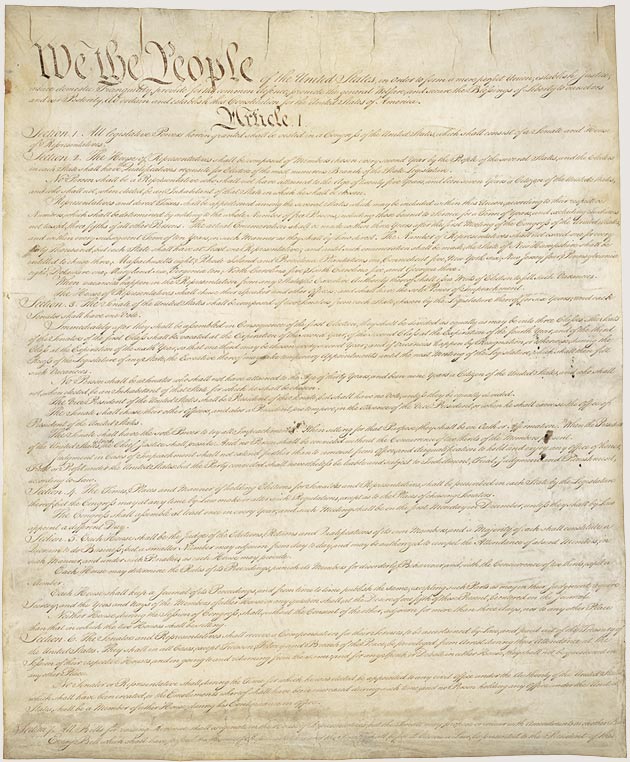
https://www.archives.gov/files/founding-docs
Economics of the Heart: Telling Truth from Lies
A lot of us old-timers well remember this lyric from the sixties, when social reaction to the Vietnam war, combined with the sudden widespread popularity of marijuana, created a youth counterculture, some great music, and widespread protest against the war. Timothy Leary neatly bookmarked the era with his beginning slogan (Tune in, Turn on, Drop out) and its sequel a few years later, “Question Authority, Think for Yourself.”
Events of 1968 were an abrupt wake-up call to some dark corners of the American body politic with the assassinations of Robert Kennedy and Martin Luther King in the prime of their intellectual and political lives, followed by the election of Richard Nixon to the Presidency. Still, in those days there were lots of liberal Republicans and conservative Democrats, but with a lot of overlap. The Supreme Court was also balanced and prudent, news organizations generally reported actual facts, and disagreements were mostly matters of degree and balance. Those balances made for a relatively functional government.
That all changed with the 1980 election of Ronald Reagan as President, whose primary mission was rolling back the New Deal. He courted Southern Democrats with major drops in financial assistance to the poor, the sick, the elderly, the insissues likeane, and minorities, and “throwing the welfare queens out of the lifeboat.” His budget director came up with “supply side” economics, an intellectually bereft theory that proclaimed that the rich were the real drivers of the economy because they reinvest their profits in new businesses that hire more workers, making the pie bigger for everyone.
Since the New Deal, the dominant macroeconomic model had been the widely accepted Keynesian theory that total demand of consumers is what drives an economy, as part of a circular flow in which households exchange labor for wages and spend their wages on the goods and services they produced, while business invested their sales in capital assets and hired workers to operate them. Everyone had a place. Reaganomics did indeed make billions of dollars for corporations and wealthy stockholders, but from 1980 to the present wealth and income became more and more skewed toward the richest Americans. In today’s world, many CEO’s earn hundreds for every dollar a worker earns.
All of this came to mind while watching this interview last night on PBS with a representative from the Atlantic Council, a think tank in international affairs focused on maintaining international security and global economic prosperity across North America and Europe. These last eight years of the Tweetster (he of the 25,000 documented lies noted by the Washington Post) have, for millions of Americans, replaced truth with sloganized “alternative facts” that have muddied all waters, evaded two impeachments, and have kept our nation on edge for three years by pretending that he actually won the 2020 election. Even worse, millions of people still believe it! And that has been made possible by 24/7 carefully scripted 24/7 Fake News on Fox, social media, and talk radio.
The interview conversation focused on organizations around the world which make a business of propagating false narratives for political reasons and asserting that there are all kinds of reasons why it is not generally illegal to lie in politics or in the press, while there can be liability. And that has brought our nation to this head-scratching place where a substantial portion of our population actually believes that the 2020 election was stolen, that Hunter Biden is more of a crook than the Tweetster, and even, as Nixon once asserted “if the President does it, it’s not illegal.”
It is hard to imagine how civilization can long endure in a world which makes no distinctions between truth and lies, fact and fiction, rules-conforming and rules-breaking. Until recently our laws have generally worked fairly well at making such distinctions. But it has all gone downhill since the Gingrich Republicans abandoned polity for shouting insults like five-year-olds. The problem seems to be that the Right gotten tired of playing by the rules, and as periodically happens in human history, some people are only okay when they have complete authority over everyone and will do anything to get it.
Along the same lines, CPJ (Committee to Protect Journalists) offers an interesting exploration of the related issue of Deciding who decides which news is fake, including issues like:
- how abuse of media laws by authoritarians around the world is a clear warning against government regulation of information,
- to avoid the privatization of censorship, any self-regulation by tech companies must be transparent, subject to independent oversight, and include a path to remedy for those affected;
- how the increasing intrusion of misinformation and propaganda in domestic media are damaging existing democracies in places including the U.S. and U.K. by interfering in domestic politics like US elections and the British referendum on Brexit.
Bottom line: Democracy can only persist when the people share a set of common values and agree to the set of rules everyone will follow to make it work.
Comments Off on lummi island wine tasting oct 6 ’23
lummi island wine tasting oct 6 ’23
Fall Hours begin this weekend:
Open Friday 4-6
This week’s wine tasting

morning moonset over Orcas
Phantom Chardonnay ’21 California $15
Entices with its rich layers of green apple and pear that lead into spicy flavors of freshly baked apple pie, while barrel fermentation imparts a creamy, luscious mouthfeel finishing with sweet notes of vanilla and melted caramel.
Quinta Do Vallado Douro Red ’14 Portugal $16
Blend of Touriga Franca, Touriga Nacional,Tinta Roriz, Sousão; lovely, floral black cherry and black currant fruit; supple yet structured with notes of pepper, meat, and a lovely herbal twist.
Sineann Cabernet Sauvignon ’17 Oregon $27
Classic Columbia Valley cab– dark, well-balanced, food friendly, and age-worthy. “We easily could have vineyard-designated any of the components of this Cabernet; we chose instead to blend it into this gorgeous wine. You will rarely experience a wine this good that costs this little!”
NO Friday Bread Pickup This Week!
Sorry, as all of you on the bread mailing list already know, our baker has conflicting obligations this week, so (sniff) NO bread Friday this week. 😕
Wine of the Week: Sineann Cabernet Sauvignon ’17 Oregon $27

The Sineann Winery is located just across the road from Oregon’s Champoeg State Park. We generally pop in to taste wine several times a year when we are visiting the park with our trailer. We still have a handful of these from our visit last year.
The winemaker gives it a glowing description:
Our 2017 Columbia Valley Cabernet is made up of Cabernet Sauvignon, and only Cabernet Sauvignon, from Phinny Hill Vineyards.We easily could have vineyard-designated any of the components of this Cabernet, but we chose instead to blend it into this gorgeous wine. You will rarely experience a wine this good that costs this little!
This wine is classic example of what a well-crafted Columbia Valley Cab can be – dark, well-balanced, food-friendly, will age very well, and a great value!
Economics of the Heart: Suicide By Plastic
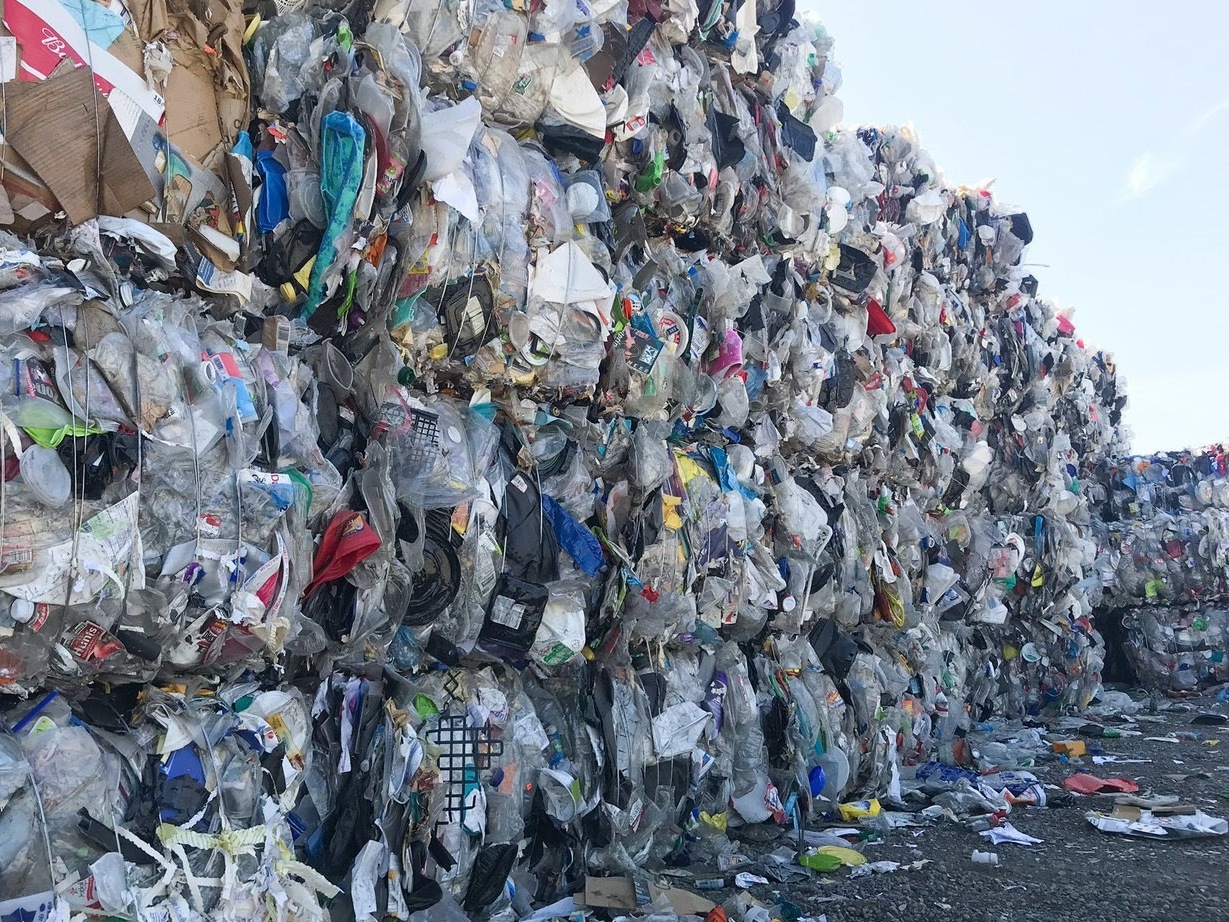
courtesy opb.org
For several years PBS has been doing specials on how billions of tons of plastic have been created by the global petroleum/chemical industry. We old-timers remember vividly this passing scene in 1967 film The Graduate in which the young Dustin Hoffman character was pulled aside for some advice about a career…in Plastics. Well, as we all know, the fellow’s prediction was absolutely true: the plastics industry would take off and take over the world. Sure, it has made a lot of people very rich, turned a lot of little kids’ rooms into Lego-riddled mine fields, and made $gazillions for a giant industry. But at what cost?
Over the next several decades plastic bags replaced paper ones, followed by plastic car interiors, bottles, dishes, trash cans, dinnerware, straws…pretty much anything could be and therefore has been made of the stuff. And it will last virtually forever, even millions of years after the grinding wheels of time turn it all to powder, each molecule will still be intact. And for the most part, it was curiously cheap to produce (if you don’t count the environmental damage), cheaper than paper, leather, glass, you name it, all quite magical, all these wonders from just your basic hydrocarbons made from, you know, old dead things from a very long time ago.
While a bunch of us started being concerned about these trends by the early seventies, the petroleum industry hadn’t yet even shifted into second gear. A glance at this chart shows that plastic production has been steadily accelerating– increasing at a slightly increasing rate –for the last seventy years, passing five hundred million tons per year in 2020. So if you want to figure out how much plastic has been made from the beginning, you have to add all those annual production numbers since 1950, visually represented by the area under the curve, a total of around 160 billion tons of the stuff. All of is still sitting around us on our dear planet’s surface, in our air, in our waters all over the globe, and in our bodies.
Awareness and concern about the increasingly visible costs of pollution grew in the sixties, ushered in the first Earth Day in 1971, and became a factor in how a lot of us chose our college and grad school majors– in my case marine resource economics. Still, though the early seventies saw a lot of progressive ideas and accomplishments, the decade became politically more and more cool toward environmental awareness and concern, ultimately ushering in forty years of Reaganism, during which all attempts at environmental maintenance and improvement met fierce opposition from the Reagan Right.
About fifteen years ago, when I was involved for a couple of years with designing some pilot courses as a basis for a new Institute of Sustainability at WWU, I was introduced to this charming video from the Story of Stuff Institute and the Tides Foundation. This film was an engaging introduction to the field of environmental economics, which has “inconveniently,” as Al Gore put it, told the truth about the fact that, for example, a large proportion of GNP, which Business insists is the Holy Grail we want to maximize, includes a lot of costs to our health, our ecosystems, our waters, habitats, and the rapidly escalating destruction we are seeing from ever intensifying fires, winds, floods, tornadoes, landslides, heat waves, and sea level rise from global climate change.
By 2020 and we were seeing scenes all over the world like this one of a sea turtle with a discarded rod (plastic?) up its nostril, the cost of just one tiny bit from the millions of tons of plastic waste building up all over the world’s lands and waters and accumulating in the food chain.
PBS has produced a number of videos in recent years, as this search reveals.
 2072 Granger Way
